

Where the spirit meets the bones:
Museum collections as a resource in ecology and conservation
By Audrey Dickinson
Museum resources are particularly useful for accessible information or as a supplement to fieldwork in ecology and conservation biology. Well-managed museums use their collections to present engaging programs which raise awareness of pressures on wildlife, while empowering visitors to support conservation with personal action. Natural history museums are thus highly valuable in accomplishing both research and outreach objectives, yet recent patterns of funding do not reflect these contributions.
A natural history museum is an enigma. The public front, which may top the list of tourist attractions in a major city, entertains and educates; tucked away behind unassuming doors, the labyrinthine storage shelves house thousands to millions of jarred, pinned, and dried specimens, which feature in a wide range of research applications. The use of data from museum specimens in research offers several benefits pertaining to cost and accessibility, and the potential applications of this data in ecology and conservation are wide-reaching. Moreover, museum collections effectively facilitate public engagement and awareness in a setting which fosters knowledge of biodiversity and its global threats. These critical functions must not be undervalued when developing conservation plans of action.
Advantages of data collected from museum specimens
In biological research, museums present an accessible and inexpensive alternative to original fieldwork. Well-maintained collections have specimens meticulously identified and labeled with precise information about the time and location of their collection in the field–a “taxo-reference” and “geo-reference” for every specimen.1 These paired references provide a wealth of pre-existing spatial and temporal data about species distribution, allowing researchers to observe ranges and flag changes over time. Preserved specimens are also readily available for morphological and molecular analysis; biologists may take measurements, sequence DNA samples, or test tissues for environmental contaminants. Across these applications, utilising museum collections can save significant time, effort, and money by eliminating the need to collect original data. Suarez and Tsutsui (2004) estimate that organizing a trip from California to the National Museum of Natural History in Washington DC costs about one-fifth as much as a typical international research trip to conduct original fieldwork. Using this metric, they propose that the National Museum’s entomology department alone saves its academic visitors the contemporary equivalent of $1.6m per year by loaning out specimens.2 Evidently, museum collections present a valuable class of highly accessible data.
This accessibility is particularly important in addressing the legacy of colonialism in bioscience. As libraries of biodiversity data, museums are key actors in the growing movement for data repatriation. Many historical collections, especially those curated in the 19th century, are marred by ethically and legally dubious methods of acquisition, with specimens harvested in colonised nations without approval from communities. Underfunded academic institutions in previously colonised nations suffer from an inability to access data representing their own biodiversity heritage. Though some artefacts such as human remains and type specimens warrant physical return to their country of origin, other collections and records may be photographed or digitised, then made available in databases to the country’s own researchers. Platforms with the express purpose of data repatriation such as the Brazilian Biodiversity Information System have been developed, assembling millions of data points from museum records; 80% of this data comes from European and US institutions.3 Thus, museums’ digitisation programs not only begin to make amends for the historical stain of exploitation but also enhance the productivity of the international scientific community.
In addition to holding a wealth of species occurrence records, museums facilitate hundreds of species discoveries annually. At the Natural History Museum in London alone, research scientists described 351 new species in 2022.4 Researchers utilised a combination of new field expeditions and reanalyses of the 80 million specimens held in the Museum’s collections to make these discoveries. Robust, complete museum collections assist in this research by providing a thorough catalogue of known diversity, allowing detection of subtle morphological and genetic differences between cryptic species. For example, museum researchers compared museum specimens to new field collections and conducted genetic analysis on 11 known ‘species’ of Australian stick insect, ultimately revising the count to 30 total species. Careful taxonomic research and revision, aided by museum collections, is essential to revealing previously unknown patterns of species diversity and therefore to conserving biodiversity.
Research applications of museum data in ecology and conservation
Museum collections can figure instrumentally in documenting range shifts in ecological surveys. For example, the 2008 resurvey of small mammal distribution in Yosemite National Park relied on extensive documentation archived in the Museum of Vertebrate Zoology at UC Berkeley. Researchers consulted notes, maps, and photographs from the Grinnell Survey conducted between 1914 and 1920, which presented a detailed account of the original study design. Based on original data, traps were set up at comparable sites to observe the change in species composition around the park. Comparing the results of the Grinnell Survey to its contemporary reproduction revealed that half of small mammal species displayed an elevational range shift of 500 meters or more, almost certainly in response to a local minimum temperature increase of 3°C.5 Therefore, beyond specimen preservation, museums are critical stewards in archiving historical data at a level of detail that permits replication, especially when studying how species track environmental change over time.
In conservation biology, museum specimens can help researchers identify declining species based on the relative abundance of species represented. To confirm the validity of this method, Gotelli et al. (2021) analysed the relationship between field abundance and museum abundance of species from several taxonomic groups. Upon comparing paired museum and field datasets, they found an imperfect but qualitatively sound association (r2=0.43); species that are well-represented in collections are likewise abundant in nature. This association cannot quantitatively predict field abundance when using museum collection abundance as a proxy, especially because rare species are consistently overrepresented in museum collections.6 However, such a method can help construct valuable estimates when field data collection is impossible.
This analysis supports the significance of drastic shifts in species composition between a historical collection to contemporary field observations. For example, Jacobson et al. (2017) reidentified museum collections of bumblebees (Bombus) in the New Hampshire area and compared these records to more recent field specimens. They identified severe range loss, local extinction, and relative abundance declines of multiple Bombus species. For example, representation of B. affinis had fallen from 5.8% of historical specimens to 0.01% of current collections, consistent with previously observed declines. Unexpectedly, relative abundance of B. vagans had fallen from 37.8% historically to 10.7% recently, leading the researchers to recommend special conservation status for the species.7 Evidently, though the association between museum and field abundance inadequately reflects small changes over time, such extreme changes are likely reflective of true abundance shifts and justifiably raise alarm among conservationists.
Similar studies have resulted in high-profile conservation attention. For example, Taylor et al. (2017) used archival data and specimens from several South African natural history museums to assemble ranges of five species of mouse shrew over time. The age of the oldest specimens coincided with the oldest weather records in the region, allowing researchers to examine shifts in range coinciding with climatic changes and model likely future shifts. The results of this computer model provided necessary evidence of current or probable future population declines, resulting in the IUCN Red List uplisting of four species.8 Thus, museum data also informs models to predict future range shifts, attracting conservation attention in official forums and offering legal protection to species classified as endangered.
Role of museums in outreach and education
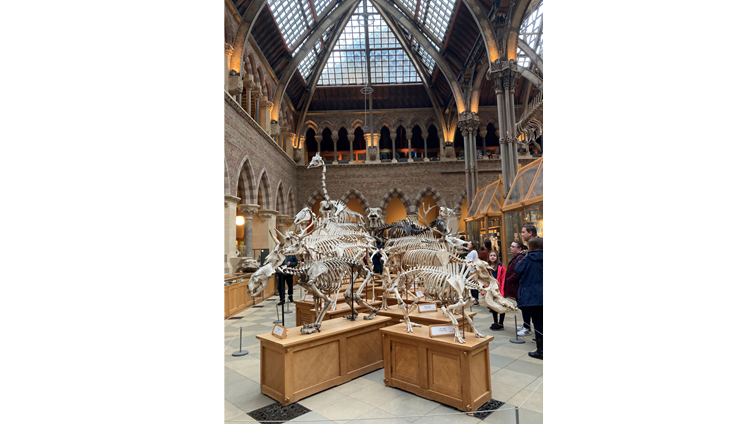
Museum collections also facilitate public engagement, which is critical in nature conservation. Museums of all types are undoubtedly key cultural institutions; presence of an artefact, art piece, or biological specimen on public display in a museum inherently elevates and contextualises it as important, and frequently ‘beautiful’. Museums are closely partnered to the public interest, at once guiding the perceptions of their field yet considering preconceived notions which alter receptivity to educational efforts. In Oxford, the Museum of Natural History played its own role in the Victorian cultural zeitgeist. Its flagship specimen and effective mascot is a dodo skull, which contains the only dodo soft tissue left in the world. When the museum was opened in the mid-19th century, this piece attracted significant attention, rescuing the dodo’s reputation from the realm of sailors’ tall tales. Charles Dodgson, then a tutor at Christ Church, was one of the visitors enraptured by the strange and wonderful creature; he wrote it into Alice’s Adventures in Wonderland.9 Though the dodo had been extinct for two centuries at this point, this parable still holds an important lesson in conservation biology. Museum collections carry extraordinary cultural significance, and the ability of such collections to amaze and inspire visitors with a strange and exciting tour of Earth’s biodiversity must not be underestimated.
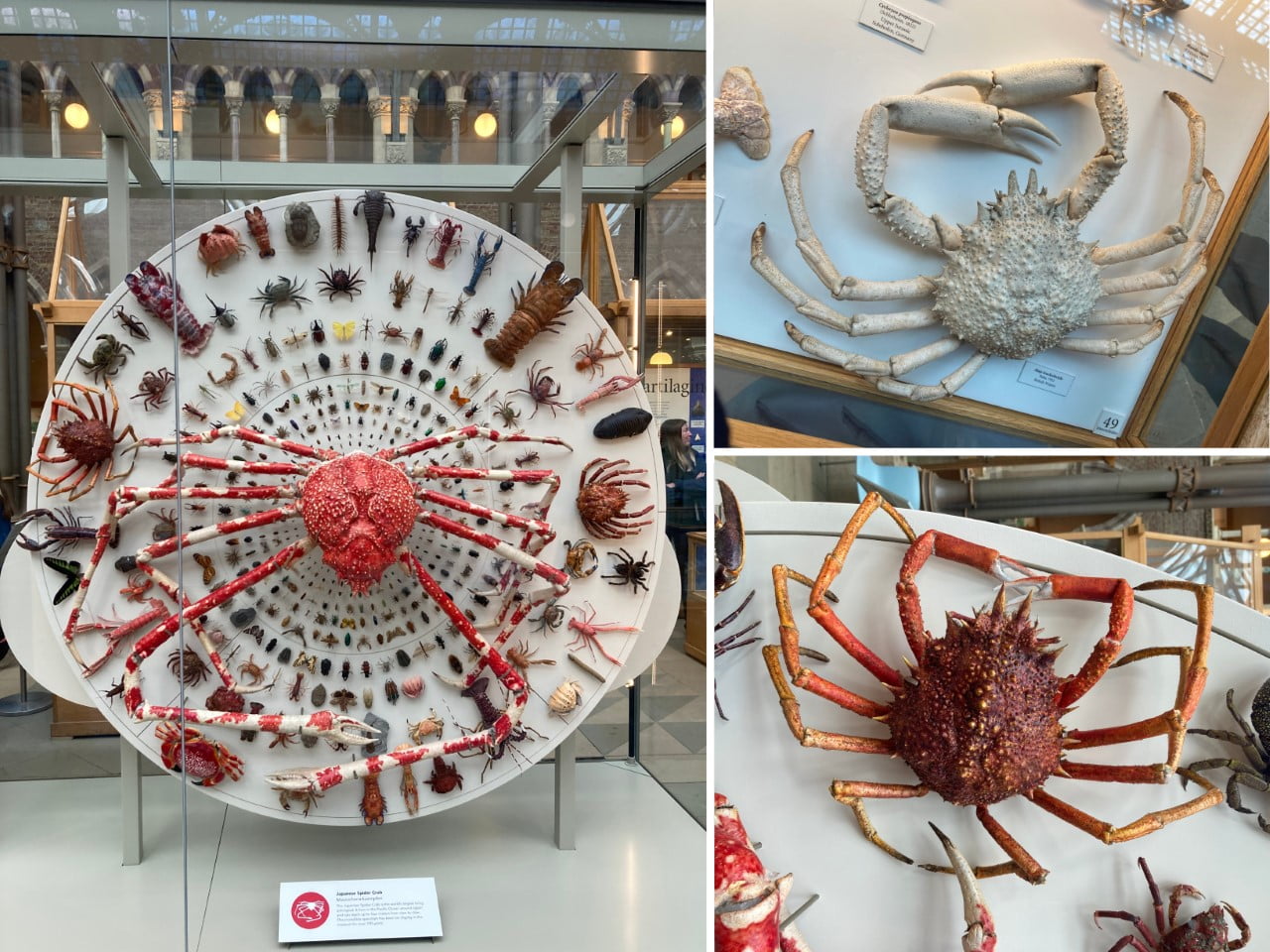
Collections must be thoughtfully managed to balance research potential and public value. Specimens on display are exposed to light and suffer degradation that make them less useful in research applications. In the Oxford Museum of Natural History, some crustacean specimens are painted prior to display to more closely resemble live organisms, and visitors are encouraged to touch taxidermied bears and otters in the forecourt. Such management entails significant trade-offs, essentially sacrificing a few specimens in order to help visitors engage more fully and internalise the value of these collections. This engagement fosters understanding and a deeper level of personal identification which together affect a person’s sense of responsibility and care for the environment.10 The public front of museums is both educational and recreational, and visiting a museum therefore turns information into an experience, a “place-based approach” to learning with well-documented effectiveness in education.11 Such experiences promote connection and emotional investment with nature conservation, instilling a sense of environmental stewardship in visitors which is essential to achieving large-scale conservation goals.

Hope for conservation in the future is dependent on effective utilisation and thoughtful maintenance of these invaluable records of life’s past. Museums provide immense value in ecology and conservation biology, with meticulously organised collections offering scores of data. They also epitomise the social impacts and responsibilities of the bioscience community, as data-sharing operations help address the legacy of imperialist exploitation while fostering a more connected international research community. Just as importantly, public-facing exhibitions inspire excitement about nature and shape people’s sense of environmental stewardship, ultimately creating conservation action. Research objectives must be integrated with outreach programs to expand their scope and impact, and museums are a powerhouse for implementing this dual function of conservation research. As pandemic hardship drags on and visitation numbers suffer, museums see their budgets slashed, staff dismissed, and scientific and cultural contributions minimised. During these times of perpetual pressures on the natural world, turning our backs on museums would be senseless.
Originally from San Diego, California, Audrey Dickinson is a current Biology undergraduate at Oxford University.
References
1Jorge Soberon (1999) Linking biodiversity information sources, Trends in Ecology & Evolution, Volume 14, Issue 7, 1999, Page 291, ISSN 0169-5347, https://doi.org/10.1016/S0169-5347(99)01617-1.
2Andrew V. Suarez and Neil D. Tsutsui. (2004). The Value of Museum Collections for Research and Society, BioScience, Volume 54, Issue 1, January 2004, Pages 66–74, https://doi.org/10.1641/0006-3568(2004)054[0066:TVOMCF]2.0.CO;2
3David Dias et al. (2017). Repatriation Data: More than two million species occurrence records added to the Brazilian Biodiversity Information Facility Repository (SiBBr). Biodiversity data journal, (5), e12012. https://doi.org/10.3897/BDJ.5.e12012
4Museum scientists described 351 new species in 2022. (n.d.). Www.nhm.ac.uk. Retrieved January 15, 2023, from https://www.nhm.ac.uk/discover/news/2022/december/natural-history-museum-scientists-describe-351-new-species-in-2022.html
5Craig Moritz, James L. Patton, Chris J. Conroy, Juan L. Parra, Gary C. White, and Steven R. Beissinger. (2008). Impact of a Century of Climate Change on Small-Mammal Communities in Yosemite National Park, USA. Science, 322(5899), 261–264. http://www.jstor.org/stable/20145010
6Nicholas J. Gotelli et al. (2021). Estimating species relative abundances from museum records. Methods in Ecology and Evolution, 00, 1– 13. https://doi.org/10.1111/2041-210X.13705
7Molly M.Jacobson, Erika M.Tucker, Minna E.Mathiasson, and Sandra M.Rehan (2018). Decline of bumble bees in northeastern North America, with special focus on Bombus terricola, Biological Conservation, Volume 217, 2018, Pages 437-445, ISSN 0006-3207, https://doi.org/10.1016/j.biocon.2017.11.026.
8Peter J. Taylor, Lilian Ogony, Jason Ogola & Roderick M. Baxter (2017). South African mouse shrews (Myosorex) feel the heat: using species distribution models (SDMs) and IUCN Red List criteria to flag extinction risks due to climate change. Mamm Res 62, 149–162 (2017). https://doi.org/10.1007/s13364-016-0291-z
9Oxford University Museum of Natural History. (n.d.). The Oxford Dodo. OUNMH. Retrieved May 29, 2022, from https://www.oum.ox.ac.uk/learning/pdfs/dodo.pdf
10Heidi L. Ballard, Colin G. H. Dixon, Emily M. Harris (2017). Youth-focused citizen science: Examining the role of environmental science learning and agency for conservation, Biological Conservation, Volume 208, 2017, Pages 65-75, ISSN 0006-3207, https://doi.org/10.1016/j.biocon.2016.05.024.
11Freek T. Bakker et al. (2020). The Global Museum: natural history collections and the future of evolutionary biology and public education. PeerJ 8:e8225. doi: 10.7717/peerj.8225