

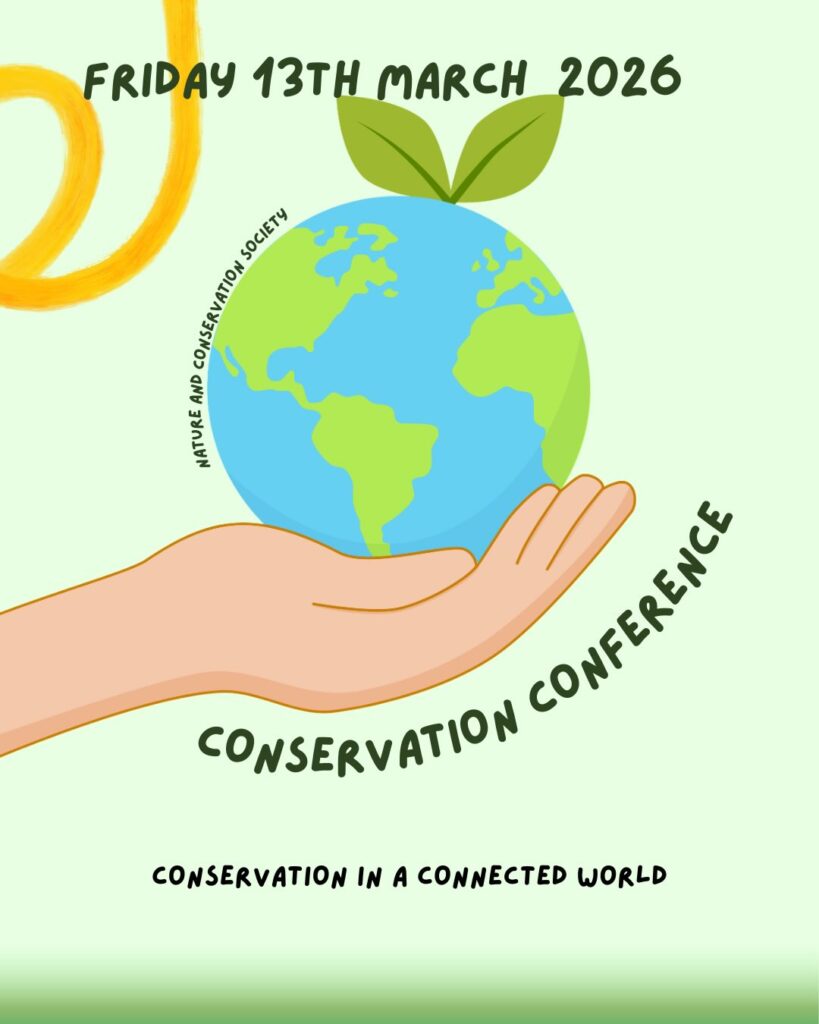
Conservation in a Connected World: It’s Challenging and Interdisciplinary
Despite the somewhat ominous date and current state of the world, this year’s UCL Nature and Conservation Society mini-conference was another highly thought-provoking and convivial gathering which BANC/ECOS was very glad to support. Following successful events in 2024 and 2025, it was great to have the opportunity to reconvene for another evening of fascinating presentations from University College London academics and some challenging discussion with students. The 2026 conference brought together speakers on environmental anthropology, experimental psychology and sustainable economics. A smaller platform and less formal venue than in previous years encouraged more audience participation and questions from the floor. It was also noticeable there were fewer participants from the Conservation Science MSc course and wider representation from other subjects, as reflected in current UCL Nature and Conservation Society president, Mars Martin (MSci Psychology and Language Sciences) and other committee members. Therefore, both the speaker line-up and audience make-up contributed to more interdisciplinary perspectives on nature conservation. In particular, developing positive relationships between environmental sustainability, conservation and public health were highlighted. BANC and ECOS were again represented by treasurer Simon Leadbeater and contributor Janet Mackinnon.
Opening and speaker introductions
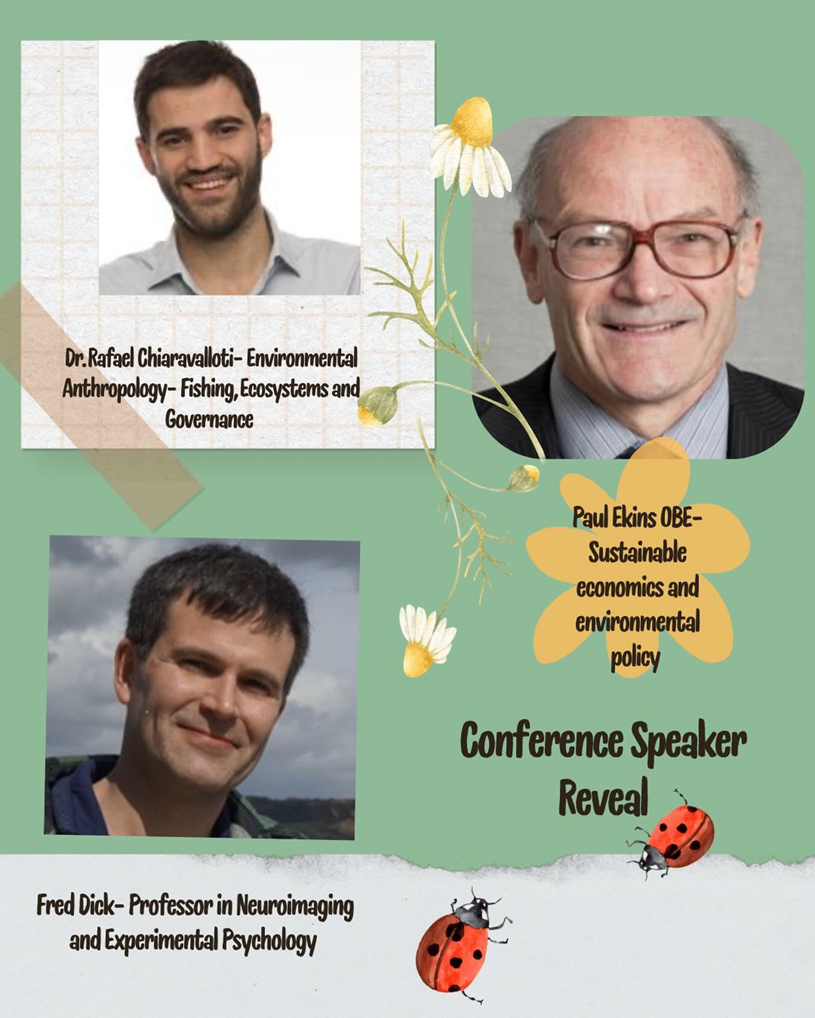
Proceedings were opened by Mars Martin and colleague with brief thematic and speaker introductions. Mars described the wide-ranging activities of UCL’s Nature and Conservation Society It was fantastic to reconnect with Brazilian environmental anthropologist Rafael Chiaravalloti who made a challenging contribution to the 2024 mini-conference on ‘Fixing the ecological crisis from ground level to the government’ with his question ‘Whose Conservation?’ Rafael was followed this year by Fred Dick, Professor in Neuroimaging and Experimental Psychology, who described how he exchanged an early career as a professional musician for one in applied interdisciplinary science. Professor Paul Ekins also followed a musical calling while becoming a leading figure in the environmental and sustainability movements, plus later a professional economist.
Conservation in an Uncertain World, Dr. Rafael Morais Chiaravalloti, Lecturer in Environmental Anthropology, UCL Anthropology Department

Rafael’s presentation once more began on a challenging note: “According to classic models in economics human groups cannot find functional governance structures under uncertainty, and social and environmental collapse are inevitable”. However, again using the Pantanal wetland of South America as a case study, he also pointed out that Indigenous Peoples and local communities (IPLCs) having been living with natural uncertainty for millennia. “Learning from and acknowledging their traditional knowledge may offer part of the solution to one of the most pressing challenges of our time,” Rafael proposed. Nevertheless, fishing-based subsistence livelihoods are not without key sustainability issues. Over-fishing due to lack of environmental governance has been widely cited as a problem by conservationists and a classic example of Garrett Hardin’s ‘tragedy of the commons.’1 Traditional practices rely upon information-sharing (or citizen science) within the community and knowledge of fishing is associated with greater social recognition than wealth or status. As pointed out in Rafael’s 2024 talk on ‘Whose Conservation?’, interventions to improve sustainability can therefore work effectively with local knowledge networks. On this occasion, he brought a wider perspective to such networks and mentioned similar cooperation among the Agta hunter gathers of the Philippines rain forests together with Maasai pastoralists of savanna rangelands in Kenya and Tanzania. Rafael emphasised that: “Cooperation in food sharing is essential to mitigate against day-to-day shortfalls in hunting or fishing success.” Similarly, “…at the start of the wet season, the ecosystem is patchy and unpredictable. Pastoralists rely on cooperative information-sharing to find resources.” Such community-based cooperation, combined with scientific evidence-based interventions, provide a way forward for “conservation in an uncertain world,” or “a condition in which past dynamics do not explain future or present ones.”
Interdisciplinary perspectives on animals and the environment, behaviour and climate change, Professor Fred Dick, Experimental Psychology and Neuroimaging

Photo: Wikipedia
Fred described how early training as a violist combined with an interest in language learning was followed by the study of cognitive science, including use of Magnetic Resonance Imaging (MRI) technology. His advice was “be prepared” to take up novel opportunities, acknowledging the role of “luck” in these. Current research projects include cognitive experiments with dolphins, Beluga whales and Gentu penguins at The Oceanographic centre in Valencia. He mentioned a well-known captive-born dolphin called Neptuno who is highly intelligent and appears to cooperate with scientific experiments and technology. Fred referred to his “abiding interest in the environment” and he currently leads UCL’s teaching on the ‘Psychology of Climate Change’. He identified the challenges of climate change as “intrinsically a behavioural problem,” highlighting the effects of heat on cognitive functions, and the role of behavioural psychology in helping devise solutions. By way of example, UCL is working with a local authority in London to encourage the community to take care of trees planted to help mitigate urban warming, and using evaluative research to help develop a ‘psychology of cooperation.’
Economics and environmental sustainability: from trade-offs to the ‘safe operating space,’ Professor Paul Ekins, UCL Institute for Sustainable Resources

Photo: Potsdam Institute
Paul identified the centrality of ‘trade-off’ economics to “the crises of climate, nature and pollution.” He proposed that an ‘alternative guiding principle’ is needed and advocates the concept of a ‘safe operating space’ based on the Planetary Boundaries framework. Aligned with this is the need for “strong sustainability thinking” and measurement. The presentation went on to consider the meaning of sustainability in different contexts – economic, social, environmental – and to distinguish between “two worldviews: weak and strong sustainability.” Weak sustainability is linked to “a massive substitution (or trade-off between) physical (manufactured) and human capital for nature capital (i.e. resources and the environment).” Paul cited the 2018 UN Environment Programme Inclusive Wealth report and The Changing Wealth of Nations 2024 (World Banks Group) as examples of this worldview, leading to “systemic depletion of resources” as reflected in the Living Planet Index. By contrast, in a ‘strong sustainability’ worldview “substitutability between different forms of capital is limited,” and “no other forms of capital can be substituted for critical natural capital.” According to a motion submitted to the International Union for the Conservation of Nature Congress in 2020: “This implies that natural capital approaches should not lead to the substitution of natural capital with other types of capital.” Paul went on to describe the methodology for a ‘strong sustainability approach’, including aggregation of key sets of national indicators into two indexes that show the current ‘sustainability gap’: (Strong Environmental Sustainability Index) and the trend towards closing it (Strong Environmental Sustainability Progress Index). He highlighted the major contribution of former doctoral student Arkaitz Usubiaga-Liaño in helping develop this approach which is explained in detail and applied in different contexts in a number of academic research papers available online.2,3,4 A key aim of this work is better understanding the financial cost of closing the ESGAP (Environmental Sustainability Gap) for each indicator. Paul concluded that the “ESGAP approach with its indices SESI and SESPI fulfils …. strong sustainability criteria and gives policy makers the summary information that they need.”
Questions and discussion

The session opened with questions and responses about climate change mitigation and adaptation given the international aim of meeting net zero by 2050.5 Human behaviour and short-termism were identified as fundamental challenges to this, as well as the need for “urgent intervention” on the nature crisis. Wildfires in the Patanal, currently the focus of a major exhibition in London’s Science Museum, were given as an example of the latter.6 Financial incentives to achieve shifts in behaviour, particularly among certain socio-economic (peer) groups are a priority, given a “relatively small group of people” globally contribute disproportionately to key environmental problems. Paul Ekins again highlighted the importance of sustainability indicators, and emphasised the role of the insurance sector (using the example of Flood Re ) as an increasingly significant intersection between humans and the environment. Meanwhile, Fred Dick advocated a “stop” on infrastructure for fossil fuel production. It was agreed that regulation and enforcement of environmental targets through legally binding measures and ‘the rule of law’ are essential. At present, corporate greenhouse gas emission reductions are voluntary making the achievement of national and international targets questionable. There was also some discussion about whether UK de-industrialisation over many years had facilitated offshoring of emissions to other, particularly developing, countries. However, Paul reflected the Climate Change Committee view that, more recently (in the past 15 years or so), net reductions have occurred.
After the discussion on ‘macro’ policy challenges, attention turned to the local success of Ultra Low Emission Zones (ULEZ) in both reducing air pollution and improving public health, with less sick leave in London one apparent consequence.7 However, it was acknowledged that ULEZ have also been controversial with strong opposition, as well as support, in some areas. Fred Dick pointed out this confirms work by UCL Professor of Cognitive Neuroscience Steve Fleming on a tendency for people in developed countries to become more polarised, indicating real underlying cognitive differences.8 This tendency poses both “individual and systemic issues.” Based on research in the Patanal and traditional “societies in balance,” Rafael maintained that prestige and social recognition are vital determinants for successful interventions and how these are perceived. Responding to a question on the use of Environment, Social, Governance (ESG) criteria in the corporate sector, the problem of short-termism, such as quarterly performance targets, was reiterated and need for ‘temporal adjusting’ to longer-term thinking and decision-making. The head of the British Antarctic Survey recently challenged the international business community to make such adjustments. Paul Ekins drew attention to the “psychological manipulation” underlying creation of consumer societies and the imperative of moving towards a circular economy model. Given systemic transformations are required, some concern was expressed from the audience about placing too much burden upon individuals to make behavioural changes, for instance in relation to travel options and so-called ‘climate footprints.’
Some concluding reflections
As someone who has played a key role in the UK green movement for half a century or so, it was a great pleasure to meet Paul at this event. As general secretary of the Ecology Party, early proponent of ‘The Living Economy’, co-founder in 1996 of the influential Forum for the Future with Jonathon Porritt and Sara Parkin, and latterly professor of sustainable economics, he had much wisdom to share. After the formal session, Paul explained his opposition to the concept of ‘limits to growth’ and support for green growth, noting the discourse between proponents of both is very much ongoing. Forum for the Future now has offices in the US, India and Singapore from where former UCL Nature and Conservation Society President Ilina Shah hails. Having been involved in organising the 2024 and 2025 mini-conferences, and now helping behind the scenes at this one, it was great to reconnect with Ilina and learn about her keen interest in herpetology as well as sustainable finance. Ilina’s reference to the Aesculapian snakes that have taken up residence near Regent’s Park, having escaped from London Zoo, also reinforced a key message of the 2026 conference about deep connections between human and planetary health.9 The serpent has profound associations with the classical god of healing, Asclepius or Aesculapius .
Finally, sincere thanks must go to this this year’s UCL Nature and Conservation Society committee members as listed below with their course subjects. It was very encouraging to find students of diverse studies bringing interdisciplinary perspectives, including vital lessons from environmental psychology, to ‘Conservation in a Connected World.’ 10
- Christine Li – MSci Biological Sciences (Events Officer)
- Inan Ahmed – MEng Sustainable Built Environments, Energy and Resources (Events)
- Jeffrey Chue – BSc Biological Sciences (Activism Officer)
- Maddie Hardiman – BA Geography (Communications Officer)
- Malissa Buajeeb – MEng Chemical Engineering (Welfare Officer)
- Mars Martin – MSci Psychology and Language Sciences (President)
- Maxime Chautemps – MSci Biological Sciences (Social Secretary)

References/Further reading
1.https://math.uchicago.edu/~shmuel/Modeling/Hardin,%20Tragedy%20of%20the%20Commons.pdf
2. Usubiaga-Liano, A. and Ekins, P. 2022 ‘Are we on the right path? Measuring progress towards environmental sustainability in European countries’, Sustainability Science, doi.org/10.1007/s11625-022-01167-2 https://discovery.ucl.ac.uk/id/eprint/10152884
3. Arkaitz Usubiaga-Liaño, Paul Ekins, Methodological choices for reflecting strong sustainability in composite indices, Ecological Economics, Volume 221, 2024, https://doi.org/10.1016/j.ecolecon.2024.108192
4. Usubiaga-Liaño A, Fairbrass A , Ekins P (2024). Strong sustainability and the environmental dimension of the Sustainable Development Goals. Global Sustainability 7, e52, 1–10. https://doi.org/10.1017/sus.2024.47
5. https://www.iea.org/reports/net-zero-by-2050
6. https://www.sciencemuseum.org.uk/see-and-do/water-pantanal-fire
8. The MetaLab (Metacognitive Neuroscience) https://metacoglab.org/ https://metacoglab.org/book
9. https://www.thelancet.com/commissions-do/planetary-and-human-health
10. https://www.sepcp.org/conservation-psychology
Well done Janet & Simon. Excellent overview.