

CLIVE HAMBLER
How have we come so close to allowing destruction of the best coral reef ecosystem on the planet? Why did most ‘green’ politicians and environmental organisations support, or not oppose, sovereignty transfer of this fragment of paradise1 to Mauritius? The conservation case was made eloquently, if incompletely, in the UK’s parliamentary debates, and mentioned in a few newspaper articles and letters, but was rejected by the British government2,3. Notably, the conservation arguments were made most vocally by groups and individuals with a general interest in the Chagos4,5,6 , rather than by environmental or scientific organisations.
The Chagos wildlife is likely to be saved if the USA vetoes amendment of its 1966 Treaty with the UK, which states: ‘The territory shall remain under United Kingdom sovereignty’. Moreover, the UK’s House of Lords may defeat ratification of the UK law required for transfer of the Chagos islands and surrounding ocean (which comprise the British Indian Ocean Territory, BIOT).
The current UK Government argued that an advisory opinion of the International Court of Justice requires BIOT be transferred to Mauritius; ministers claimed without transfer the military base was at imminent risk of becoming inoperable under the UN Convention on the Law of the Sea (and telecommunications protocols). This was contradicted by lawyers arguing the Court has no jurisdiction for disputes amongst commonwealth countries, and the law (and protocols) have exemptions for military uses. Investigations are underway as to whether ministers have misled Parliament, the USA and the public.
Moreover, the Committee on the Elimination of Racial Discrimination, associated with the United Nations, urged the transfer be suspended to respect the human rights of the Chagossians under the International Convention on the Elimination of All Forms of Racial Discrimination, and under other international Covenants.
One of the most important conservation battles ever may be won through military imperatives, not by conservationists.
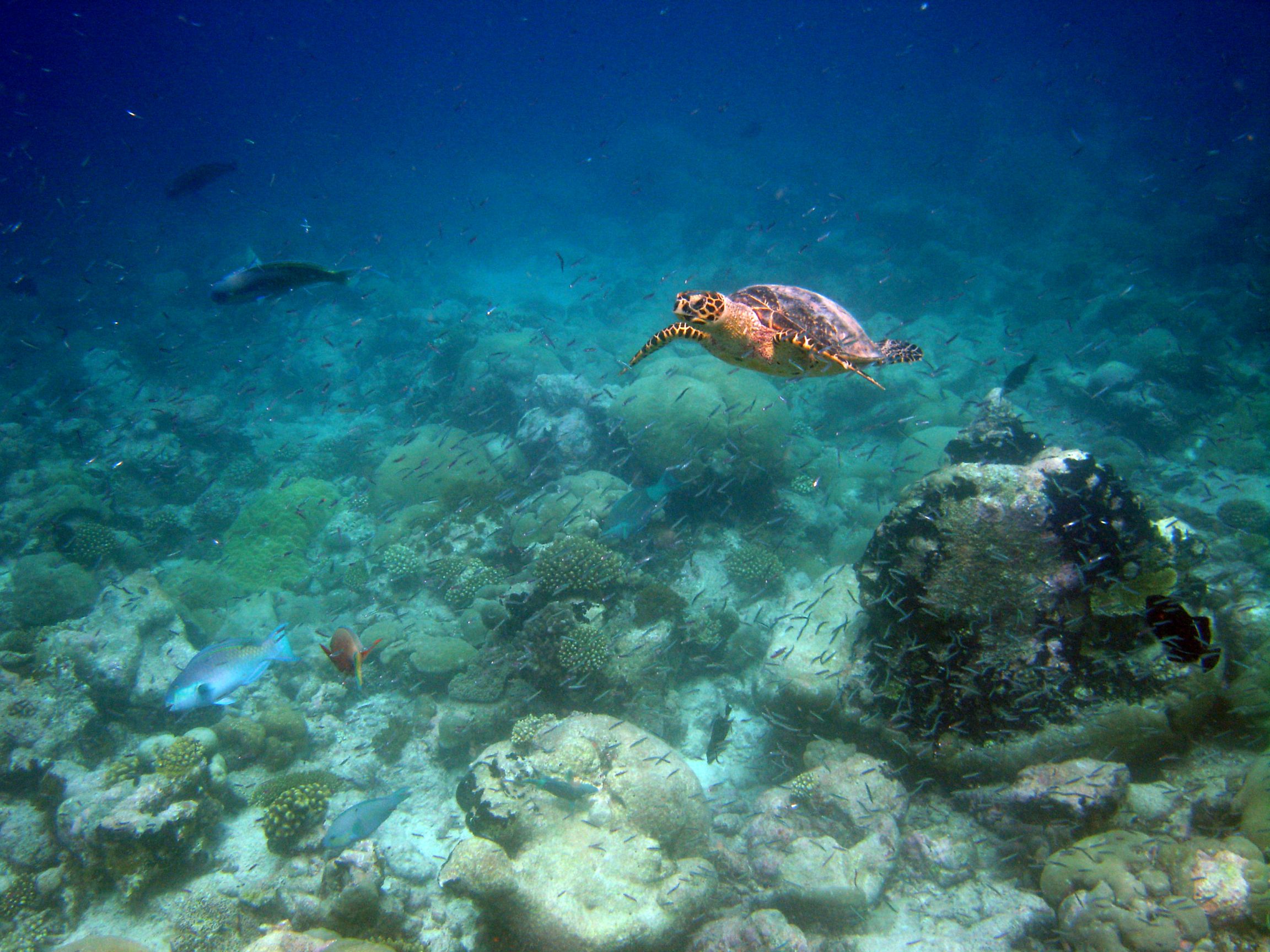
Photo: Wikipedia
Two paths to conservation successes – deliberate and collateral
Ironically, it was the great conservation success of protecting Aldabra atoll in the Seychelles from military use in the 1960s that first exposed the Chagos to a risk of destruction, but then caused its protection. When the uniquely intact and remarkable ecosystem of Aldabra was threatened by a large military base for the USA and UK, many scientists, conservationists, the Royal Society and the Smithsonian Institution successfully fought to protect Aldabra – with some 80,0000 giant tortoises and the flightless Aldabra rail as flagships7. As a result, plans for the base shifted to a similarly large atoll in the Chagos Archipelago: Diego Garcia.
Tragically for Chagossian people, but fortunately for wildlife, Diego Garcia already had a devastated land surface with low conservation value, although further damage to land and marine habitats was inevitable in construction of the base. With a military facility of great global importance, human activities in the area have been highly restricted; whilst the armed forces have contributed very enthusiastically and effectively to conservation in the Chagos.
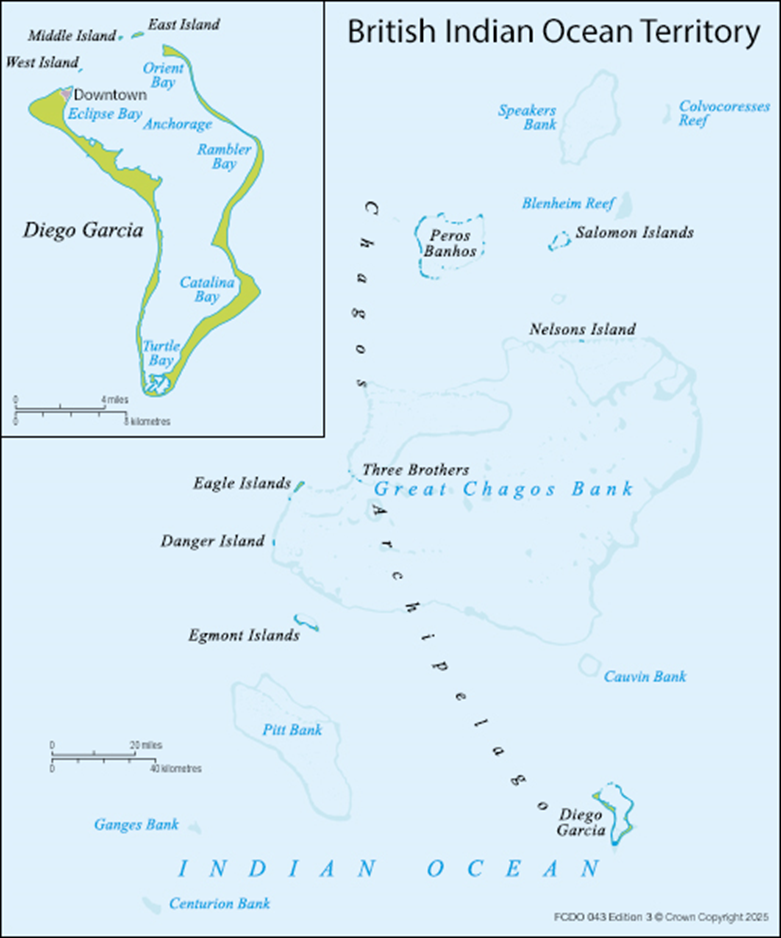
Photo: BIOT administration
The geodiversity behind biodiversity
Building a military facility on Diego Garcia did not cause great concern from conservationists because, unlike Aldabra atoll it has no endemic species (unique to the island). The geological histories of the two atolls explain the difference: the Chagos are very new islands.
The Chagos, Maldives and other atolls, and some submarine banks such as the Great Chagos Bank, formed on ancient volcanos capped with coral limestone. Whilst there is uncertainty of some details, the broad history of sea level has been obtained by dating the fossil coral that forms the islands. During part of the Eemian (also known as the Last Interglacial), some 124,000 to 119,000 years ago, global temperatures were at least 2OC higher than today and sea level up to about nine metres higher8. Reefs from this period formed parts of the current limestone surface of Aldabra and also rings of coral perched at a similar altitude on the cliffs of the granitic Seychelles9,10,11. Aldabra’s land surface was a fully immersed reef about 125,000 years ago12.
It is therefore likely Aldabra had a living reef surface that kept up or caught up with the Eemian sea level rises. This contradicts the long-standing opinion that Aldabra is a ‘raised’ coral atoll, levered out of the sea by volcanic and tectonic action. In contrast, the current Chagos islands would have been coral reefs several metres below sea level in the Eemian. As the Pleistocene ice age developed, sea level dropped and the Chagos, Maldives and Aldabra became islands tens of metres above sea level, some linked by expansive land.
As the ice age ended about 12,000 years ago and the Holocene interglacial commenced, sea levels rose and vertical growth of corals formed the current Chagos and Maldives10, indicating warmer temperatures than today. Global cooling then occurred towards today’s temperature, sea level dropped, and the current Chagos islands emerged from the sea, killing the corals and forming a limestone surface only about 3000 – 4000 years ago10. Diego Garcia has rocks now only about two or three metres above sea level (and dune peaks rising to five metres).
The Chagos and Maldives, therefore, have only had a few thousand years for terrestrial species to colonise and diversify. There are no known endemic full species of terrestrial organism, and only a few endemic sub-species of invertebrate1. In contrast, Aldabra has had some 80,000 years of terrestrial surface11, 12, enough for several birds, reptiles and many plants and invertebrates to diverge to full species distinctiveness.
It is the marine life, therefore, that makes the Chagos region special ecologically. There are a few known marine endemic species1, 13, presumably isolated by ocean currents. Although some of these might eventually be found to have existed or exist elsewhere, their main populations are now likely to be in Chagos.
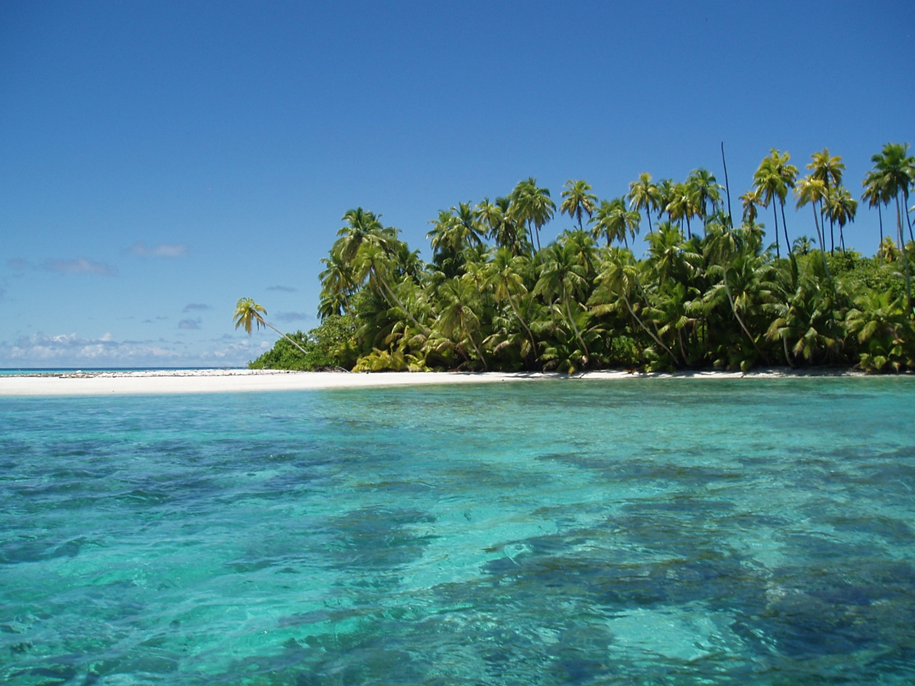
Photo: Wikipedia
The people of the Chagos
To understand the complexity of the Chagos situation, it is necessary to examine the human history of this part of the Indian Ocean. The Chagos were visited by traditional peoples island-hopping the same chain of atolls as the Maldives, and there are place names likely referring to some Chagos islands in Maldivian history. But such atolls are very dangerous and despite high rainfall have very limited fresh water, so were not colonised until European technology permitted. Uninhabited when encountered by the Portuguese in the early 1500s, settlement was attempted by the English in 1786. The islands were colonised by France, obtained by British conquest in 1814, and managed for administrative convenience from Mauritius. As the British Empire dissolved, many islands in the Indian Ocean changed sovereignty. The Seychelles became independent and included Aldabra, leaving the Chagos as the only British Indian Ocean Territory (BIOT).
Diego Garcia in the 1960s was peopled mostly by indigenous Chagossians, including the descendants of the slave labourers brought by the French in the 1790s and emancipated by the English after 1839. A few thousand Chagossians worked on coconut (copra) plantations, turtle-hunting and small-scale fishing.
All the Chagossians were removed from BIOT by 1973, during construction of the Diego Garcia military base – on grounds of security and perhaps the costs of maintaining the settlement. Exiles were forced to Mauritius, Seychelles and elsewhere, and have scattered since – many to Britain. Having been marginalised in Mauritius, and largely excluded from the dispute over transfer, a Chagossian Government-in-Exile was recently constituted, based on the self-determination and indigenous management systems of their ancestors on Chagos. A few Chagossians are survivors of the eviction, bearing historical and traditional ecological knowledge. In February 2026, four British Chagossians landed on a Chagos island and formed an administration, starting recolonisation but soon facing attempts at eviction by Britain.
A biodiversity benchmark protected
There have been numerous scientific studies at Diego Garcia, from 1880s onwards. Before, during and after construction of the military facility, several biological surveys were done for scientific and conservation purposes, including by the world expert on atolls, David Stoddart14, 15, and by pioneers of reef conservation, David Bellamy and Charles Sheppard16, 17. These and subsequent studies have become extremely important ‘baselines’ or ‘benchmarks’ for monitoring and understanding change in Chagos and elsewhere18. The reefs are long known19 to be in “exceptionally good condition, and it was in recognition of this, and the need for global reference and ‘reserve’ sites, that led to the establishment of the protected area”.
With strict military secrecy and access controls, BIOT was initially relatively well protected; except for Diego Garcia, pollution and further disturbance was extremely low18, and fishing could be regulated. The remote region had escaped heavy and destructive reef fishing and coral mining which had depleted the Maldives, and after eviction of the Chagossians the main inshore fishing was around Diego Garcia by the armed forces. Commercial fishing such as long-lining and purse-seining was permitted in BIOT, under license, until creation of the Marine Protected Area (MPA) in 201020. The MPA was opposed by many Chagossians, whose eviction was reinforced. It was also opposed by Mauritius which now claimed fishing and sea-bed mineral rights.
A proposal for World Heritage status, which Chagos clearly deserves21, was opposed by the UK, presumably because it was deemed incompatible with military use and the 1966 treaty with the USA. However, in a 1997 BIOT Conservation Policy Statement, the UK committed to manage the Chagos as if it were a World Heritage Site22. It is curious that unlike other overseas territories, Chagos did not feature in Biodiversity, the UK Action Plan of 1994. The Chagos include a Ramsar wetland site (on Diego Garcia) and Important Bird Areas, and are included in the Bonn Convention – but were for some purposes excluded from the Convention on Biological Diversity22.
Survey and restoration work continues led by the Chagos Conservation Trust, with other contributions by organisations such as the UK Overseas Territories Conservation Forum, and financial support from the Bertarelli Foundation and UK Government. Whilst access is difficult and expensive, there have been a significant number of scientific expeditions monitoring the status of reefs, including coral bleaching – some using standardised methods and sites developed by Charles Sheppard and his team. Studies have been expanded by the Zoological Society of London, plus other UK and international research institutions.
Creating a conservation crisis
The British Government in 2025 signed a ‘deal’ with Mauritius to ‘decolonise’ BIOT and attempt transfer of its sovereignty to Mauritius, but this met very strong opposition in the UK’s House of Lords and from the government of the USA. The British Government continues to attempt to ratify the transfer, with political and legal opposition continuing and building to the present (March 2026); indeed, the dispute threatens to destabilise the governments of both Britain and Mauritius. The wildlife value of the Chagos and the strength of public opposition to transfer to Mauritius (or ‘surrender’ as opposition termed it) should have been no surprise to governments. The territory was long recognised as having internationally outstanding reefs and a relatively intact ecosystem of global importance1, 20, 23, 24, 25.
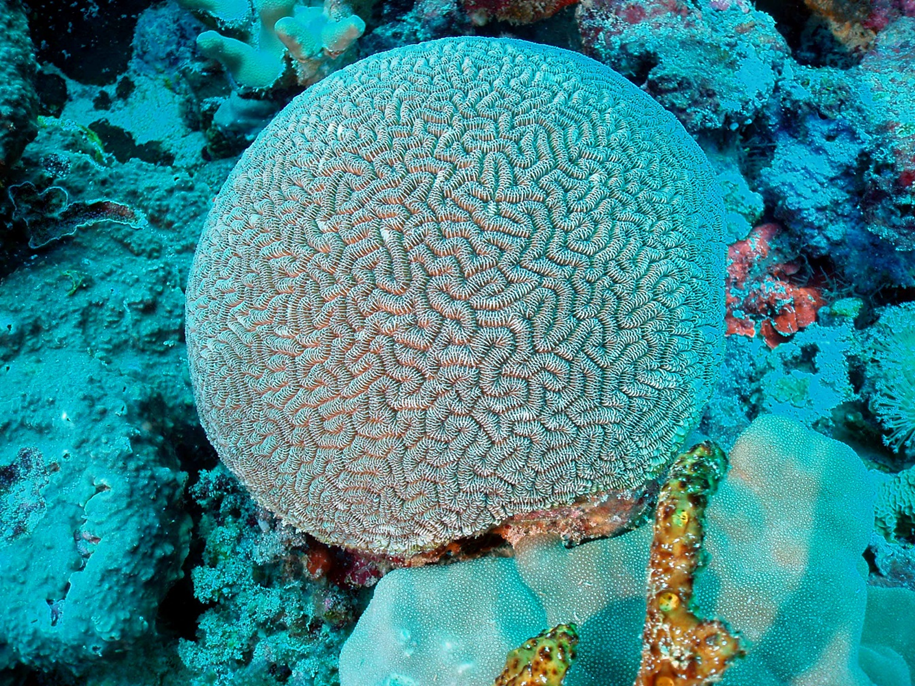
Photo: Wikipedia
A global priority
A case could be made the Chagos is the most important Marine Protected Area on Earth. Indeed, given the disturbance to tropical forests (including the megafaunal extinctions) the Chagos is arguably the most important protected area in the world.
The exceptional value of Chagos to science and conservation lies not in the species richness, population size of fish or birds, or endemic species. Whilst high, there are higher values of these features elsewhere. The extraordinary feature of Chagos is the functioning of its ecosystem being relatively natural or near pristine20, 26. This value will increase even further with restoration. There are other very large MPAs but these are either not tropical or have been more heavily exploited. The state of the Chagos ecosystem makes it a unique type of biodiversity – which Britain has a moral (and arguably legal) duty to protect under the Convention on Biological Diversity.
A near-natural site can be compared to many other regions of the planet to help detect human impacts. Such a ‘biodiversity baseline’ is vital for the science of sustainability, for conservation and as a target state for rewilding (restoration towards greater naturalness18). If we do not protect such near-natural sites as one of the highest conservation priorities, there will be ‘shifting baselines’ of increasingly degraded habitats, with targets for restoration becoming decreasingly ambitious18. Near-natural sites will also protect sensitive species as yet undiscovered.
The Chagos does support relatively high populations of large predatory fish such as sharks, rays and grouper. Very regrettably, such species have diminished when patrolling was relaxed18, and are now below historical levels due to greatly inadequate protection against poaching27. Similarly, sea cucumber poaching is occurring28.
The Chagos support a number of threatened species, including hawksbill sea-turtles (Eretmochelys imbricata) remarkably near carrying capacity29, and a major population of robber crabs (Birgus latro). It has high potential value for some declining seabirds including tropicbirds. Some extinctions have occurred, including an unknown seal30.
As with other successful MPAs18, 20, strong populations of species in the Chagos are likely to spill-over and replenish depleted regions elsewhere in the Indian Ocean, such as the Maldives, Seychelles and beyond.
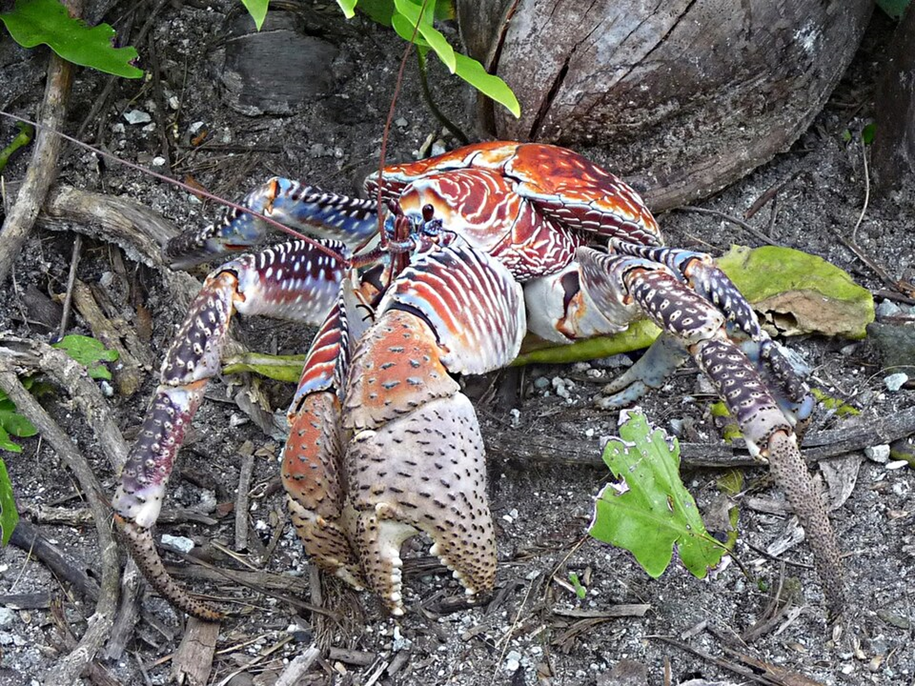
Photo: Laura J. Beauregard/USFWS Flickr
Priorities for a positive future
Some scientists have concerns that coral bleaching threatens Chagos, including the Critically Endangered Chagos brain coral Ctenella chagius31. However, it can be argued the Chagos atolls were built in warmer seas only a few thousand years ago, and in the Eemian, so endemic and other marine species in the region should be able to cope with or benefit from warmer temperatures. Intriguingly, bleaching has been relatively weak and short-lived in Chagos32, 33, 34. It is hypothesised the relatively natural proportions of fish species reduce stress on the reefs32, create gaps for recolonization, and protect them from synergistic effects promoting bleaching. If confirmed, this may have urgent relevance to the protection and restoration of reefs, to ‘blue carbon’ storage and to ‘climate resilience’ elsewhere.
Some fear the Chagos atolls will be lost anyway, through sea-level rise. However, many of the Maldives and Pacific atolls, far from losing land area, are gaining it under sand deposition and other processes35. Moreover, submergence of the islands could give more area for reefs and endemic marine life in exchange for the degraded terrestrial surface.
The future of Chagos should now be discussed and agreed with the Chagos Government-in-Exile (perhaps now the Government of Chagos). If people return to inhabit the islands – supported by human rights to self-determination – then it must be accepted that their activities will inevitably degrade some of the existing ecological value. There will be disturbance, introduced species, and unfortunately some fishing. Ideally, habitation would be confined to a few islands, to minimise light and other pollution.
However, many Chagossians hope to become stewards for their environment36, including perhaps very low-volume, high-value ecotourism. They could contribute to patrolling the protected area, so the value of some features such as fish stocks will increase. Present management of the MPA is evidently not meeting the UK’s conservation commitments. There is also ghost-fishing by discarded equipment such as nets, and plastic pollution that the Chagossians could help remove and manage. The marine area needs far better monitoring and enforcement against fishing, including satellites but particularly with patrol boats. This should allow recovery of at least some species of fish, although some highly mobile species such as large sharks will be killed beyond the MPA and are unlikely to fully recover.
Protection of the Chagos as a baseline ideally would maintain a strict no-take zone, and fishing is thus incompatible with strictly conserving the key feature of the Chagos18, 20, 23, 38. The UK Government states2 that Mauritian plans for low levels of “artisanal fishing, compatible with nature conservation or for subsistence of the Chagossian community, would be allowed in certain limited areas.” This claim is true only if ‘conservation’ is defined narrowly to be ‘sustainable use’. Large, slow-breeding and other ‘high quality’ species18 of conservation concern should remain unfished – retaining an oustanding biological value of the Chagos. It is reassuring that the Chagossians recolonizing Peros Banhos island have refrained from eating robber crabs, unlike some other visitors.
There is an opportunity to exploit the recolonization of Chagos as a scientific experiment of global value. Statistically literate ecologists should be consulted to design a zonation of the region, with the best areas remaining strictly protected. Other areas could be randomly assigned to management treatments, with replication. These would include different fishing methods and target species. Chagossians should be involved in such research.
The deep sea of the Chagos EEZ has many topographic features such as sea mounts, trenches and plains and hydrothermal vents20. It is a priority to explore for endemic species associated with the geothermal features – both geologically active and inactive, and with other geodiversity such as polymetallic nodule fields. There may be surprises in store – Coelacanth, perhaps?
Deep-sea mining was a probable incentive for the attempted transfer of Chagos to a nation likely (with the assistance of others) to harvest polymetallic nodules and other very valuable minerals39, 40. However, these may support endemic or rare species including microbes and are a global top priority for protecting ‘Biodiversity Beyond National Jurisdiction’41. The contribution of polymetallic nodules to global oxygen production42 could be studied in Chagos, including the biochemical mechanisms. Such mining should be completely banned under the MPA, to enable understanding of such ecosystems. This would permit a global benchmark for studies of the impacts of mining. The mining proposals for minerals used in the ‘clean’ renewable energy industry illustrate how climate policy could lead to more extinctions than climate change18. Oil and gas have been discovered in the central Indian Ocean, but are presently uneconomic.
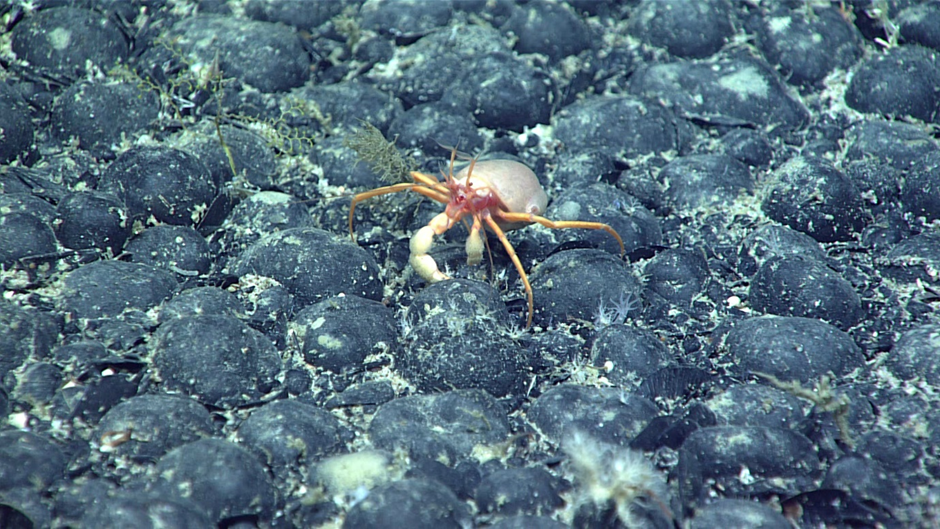
Photo: https://oceanexplorer.noaa.gov
Conservationists have long advocated restoration of the terrestrial atoll surfaces, where possible, drawing on relict populations of organism on the less disturbed atolls19. Rewilding the atolls began in the 1970s with attempted black rat (Rattus rattus) eradication projects43. Recent rat eradication on some atolls has led to greatly improved seabird nesting success and restoration of biogeochemical cycles such as nutrient flows from sea to land44. Other invasives include donkeys, cats and numerous plants.
To help establish the target state for restoration, there should be renewed and exhaustive efforts to do archaeology and paleoecology, including peat-cores in the extraordinary freshwater swamp on Peros Banhos, one of the only sites in the region that might provide useful pollen and other records, and at risk of being destroyed under human settlement. It is very important to know, for example, if Casuarina equisetifolia trees were introduced to Indian Ocean atolls, since they are treated as regionally invasive on Aldabra, yet support many species. Mud turtles (Pelusois subniger) should be reintroduced. Dugongs (Dugong dugon) occurred in the Chagos30 and might recolonise naturally or by reintroduction.
Strict biosecurity should be a high priority, to minimize species introductions. The risks of invasives would increase greatly with inhabitation and tourism. There have been unauthorised landings (by yachts, migrants, Mauritians and Chagossians), and incursions into the MPA (by the Maldives and illegal fishing and spying boats). If recolonised by Chagossians, ideally most food would be imported, most waste exported and most drinking water obtained by desalinisation.
Chagos is a world heritage of incalculable and irreplaceable value. It should be nominated, recognised , and managed as such. It must never be a World Heritage in Danger, but would be rendered as such by the activities Mauritius intends.
Given the immense value of Chagos was known decades ago, why did conservationists in general fail the Chagos at the moment of acute need? Plausible reasons include colonial guilt and decolonisation agendas; conflicts of interest; vested interest; vulnerability to loss of funding and employment; fear of upsetting China, India and Mauritius; and desire for mined materials such as critical minerals needed for Net Zero targets (but available elsewhere). There will be concern over jeopardising existing collaborations with Mauritius. Mauritius has a good record in terrestrial conservation18, but sadly has one of the worst in reef conservation and has almost no capacity for protection of remote areas4.
The Chagos crisis illustrates the vulnerabilities of UK Overseas Territories to unnuanced ‘decolonisation’ agendas45, with some advocates having insufficient understanding of the failures of similar treaties (such as the transfer of Hong Kong) adequately to protect wildlife and human rights. The UK “fails to act responsibly if it hands over the archipelago to a state that is uninterested in or incapable of protecting them from harm”46 – potentially breaching environmental laws such as the Convention on Biological Diversity. Emerging opportunistic ‘conservation geopolitics’ risk undermining global conservation priorities. The Chagos are amongst the best-known marine ecosystems but are a microcosm of conservation challenges, as Charles Sheppard and others have documented47, 48.
The conservation community and environmental bodies now need to step forward, to help save, restore and study the Chagos and put conservation before polarised politics – for a change.
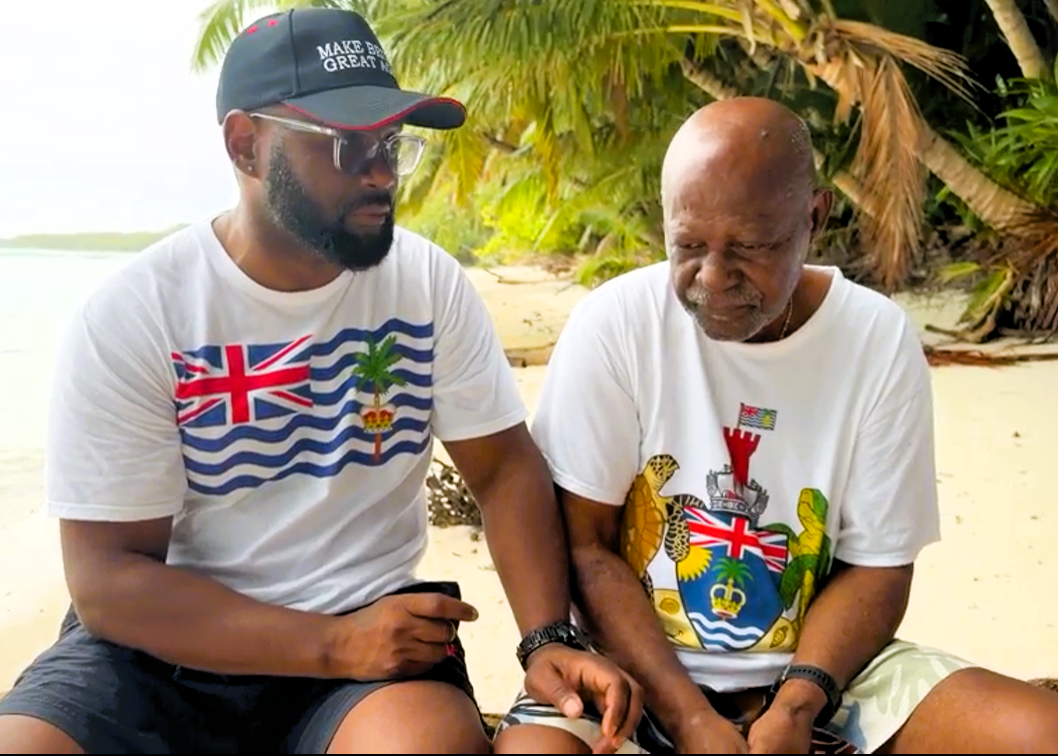
Photo: Chagos rough cut – pCloud
Clive Hambler is a College Lecturer in the Department of Biology, University of Oxford. He has worked on the ecology of Indian Ocean islands since 1980. https://www.hertford.ox.ac.uk/staff/clive-hambler
References
1. Oldfield, S. (1987). Fragments of Paradise. A guide for conservation action in the UK Dependent Territories. Pisces Publications for BANC, Oxford.
2. Chapman, J. (2025). In: Diego Garcia Military Base and British Indian Ocean Territory Bill Hansard Volume 850: debated on Tuesday 25 November 2025.
3. Chapman, J. (2026). In: Diego Garcia Military Base and British Indian Ocean Territory Bill. Hansard Volume 851: debated on Monday 5 January 2026.
4. Zhu, Y.Y. (2026). Averting an environmental catastrophe in the Chagos Archipelago. Policy Exchange. London.
5. Hambler, C (2026). Chagos Islands’ pristine ecology must be protected. https://www.theguardian.com/world/2026/jan/28/chagos-islands-pristine-ecology-must-be-protected Accessed 17 February 2026.
6. Conservative Post (2026). https://conservativepost.co.uk/chagos-at-risk-why-are-green-mps-and-so-many-parliamentarians-failing-to-protect-this-global-treasure Accessed 16 February 2026.
7. Stoddart, D.R. (1971). Scientific studies at Aldabra and neighbouring islands. Philosophical Transactions of the Royal Society of London 260: 5-29.
8. Rholing, E.J. et al. (2007). High rates of sea-level rise during the last interglacial period. Nature Geoscience 1: 38-42.
9. Montaggioni, L.F. & Hoang, C.T. (1988). The last interglacial high sea level in the granitic Seychelles, Indian ocean Palaeogeography, Palaeoclimatology, Palaeoecology 64: 79-91.
10. Woodroffe, S.A. & Horton, B.P. (2005). Holocene sea-level changes in the Indo-Pacific. Journal of Asian Earth Sciences 25: 29-43.
11. Braithwaite, C.J.R. (2020). Interglacial changes in sea level on Aldabra, western Indian ocean. Sedimentology 67: 3236-3258.
12. Taylor, J.D. et al. (1979). Terrestrial faunas and habitats of Aldabra during the late Pleistocene. Philosophical Transactions of the Royal Society 286: 47-66.
13. Chagos Information Portal. ChIP https://chip.chagos-trust.org/fishes Accessed 19 February 2026.
14. Stoddart, D.R. (1971). Settlement and development of Diego Garcia. Atoll Research Bulletin 149: 208-237.
15. Stoddart, D.R. & Taylor, D.L. (eds.). Geology and ecology of Diego Garcia Atoll, Chagos Archipelago. Atoll Research Bulletin 149: 1-237.
16. Bellamy, D.J. (1979). Half of paradise. Cassells, London.
17. Sheppard, C.R.C. & Seaward, M.R.D. (1999). Ecology of the Chagos Archipelago. Westbury Publishing, London.
18. Hambler, C. & Canney, S.M. (2013). Conservation. Cambridge University Press, Cambridge.
19. Sheppard, C. et al. (2012). Conservation and management in British Indian Ocean Territory (Chagos Archipelago). https://www.researchgate.net/publication/266051959_Conservation_and_Management_in_British_Indian_Ocean_Territory_Chagos_Archipelago Accessed 16 February 2026.
20. Koldewey, H.J. et al. (2010). Potential benefits to fisheries and biodiversity of the Chagos Archipelago / British Indian Ocean Territory as a no-take marine reserve. Marine Pollution Bulletin 60: 1906-1915.
21. Salm, R.V. (1983). Coral reefs of the Western Indian Ocean: a threatened heritage. Ambio 12: 349-353.
22. Sand, P.H. (2010). The Chagos Archipelago – Footprint of empire, or World Heritage? Environmental Policy and Law 40: 232-242.
23. Sheppard, C.R.C. et al. (2012). Reefs and islands of the Chagos Archipelago, Indian Ocean: why it is the world’s largest no-take marine protected area. Aquatic Conservation 22: 232-261.
24. Hambler, C. & Wragg, G.M. (1997). British biodiversity overseas: saving the irreplaceable. British Wildlife, 9: 100-108.
25. Hambler, C. (2004). Conservation. Cambridge University Press, Cambridge.
26. Topp, J. (1998). British Indian Ocean Territory – an almost pristine coral ecosystem. ECOS 19: 27-30.
27. Ferretti, F. et al. (2018). Shark baselines and the conservation role of remote coral reef ecosystems. Science Advances. https://doi.org/10.1126/sciadv.aaq0333
28. Price, A.R.G. et al. (2009). Chagos feels the pinch: assessment of holothurian (sea cucumber) abundance, illegal harvesting and conservation prospects in British Indian Ocean Territory. Aquatic Conservation: Marine and Freshwarter Ecosystems 20: 117-126.
29. Mortimer, J.A. et al. (2025). Low growth rates at high population densities in sea turtles. Marine Biology 172: 79. https://doi.org/10.1007/s00227-025-04638-z
30. Stoddart, D.R. (1972). Pinnipeds or sirenians at western Indian Ocean Islands? Journal of Zoology, London 167: 207-217.
31. Wilson, B. & Edmunds, P.J. (2025). Survival, rarity and extinction in tropical stony corals. Conservation Biology https://doi.org/10.1111/cobi.70200
32. Head, C.E.I. et al. (2019). Coral bleaching impacts from back-to-back 2015-2016 thermal anomalies in the remote central Indian Ocean. Coral Reefs 38: 605-618.
33. Sheppard, C. et al. (2020). Coral mass mortalities in the Chagos Archipelago over 40 years: Regional species and assemblage extinctions and indications of positive feedbacks. Marine Pollution Bulletin 154:111075. https://doi.org/10.1016/j.marpolbul.2020.111075
34. Spalding, M. et al. (2025). Coral bleaching and mortality in the Chagos Archipelago, 2024. https://icriforum.org/coral-bleaching-report-chagos-archipelago Accessed 12 February 2026.
35. Zhang, Y. et al. (2024). Evolutionary dynamics of island shoreline in the context of climate change: insights from extensive empirical evidence. International Journal of Digital Earth https://doi.org/10.1080/17538947.2024.2329816
36. Mandarin, M. (2025) Chagos islands Government in Exile https://x.com/i/status/2000904730831413739 Accessed 16 Feb. 2026.
37. Mandarin, M. (2026) Mothering Sunday Sermon from Misley Mandarin, Interim First Minister of the Chagos Islands. https://www.youtube.com/watch?v=woaKqjnfnFw Accessed 15 March 2026.
38. Sala, E. (2026). Cited in: Horton, H. Chagossian people would be allowed to fish in area now teeming with life since ban was introduced in 2010. The Guardian, 3 February 2026.
39. Khan, I.A. (2022). Indian Ocean: why is Mauritius looking to deep-sea mining? https://lexpress.mu/node/404249 Accessed 17 February 2026.40. Bullivant, C. (2026).
40. Bullivant, C. (2026). https://conservativepost.co.uk/chagos-at-the-centre-of-the-deep-sea-minerals-race-why-britain-should-think-twice-before-giving-up-control/#comment-5913 Accessed 12 February 2026
41. https://deep-sea-conservation.org/key-threats Accessed 16 February 2026.
42. Sweetman, A.K. et al. (2024). Evidence of dark oxygen production at the abyssal seafloor. Nature Geoscience 17: 737-739.
43. Hirons, M.J. et al. (1976). Birds on the Chagos Bank. Nature 260: 387.
44. Benkwitt, C.E. et al. (2021). Rat eradication restores nutrient subsidies from seabirds across terrestrial and marine ecosystems. Current Biology https://doi.org/10.1016/j.cub.2021.03.104
45. Pienkowski, M. et al. (2022). The UK Overseas Territories: moving away from colonialism in the environment? ECOS 43: (3.2.1).
46. Ekins, R. (2026) The Chagos Islands deal is even worse than it looks. https://thecritic.co.uk/the-chagos-islands-deal-is-even-worse-than-it-looks Accessed 19 March 2026.
47. Dunne, R.P. et al (2014). Chapter Three – The creation of the Chagos Marine Protected Area: a fisheries perspective. Advances in Marine Biology 69, 79-127.
48. Sheppard, C.R.C. (2024). The Chagos Archipelago. A biological biography. CRC Press, Boca Raton.