

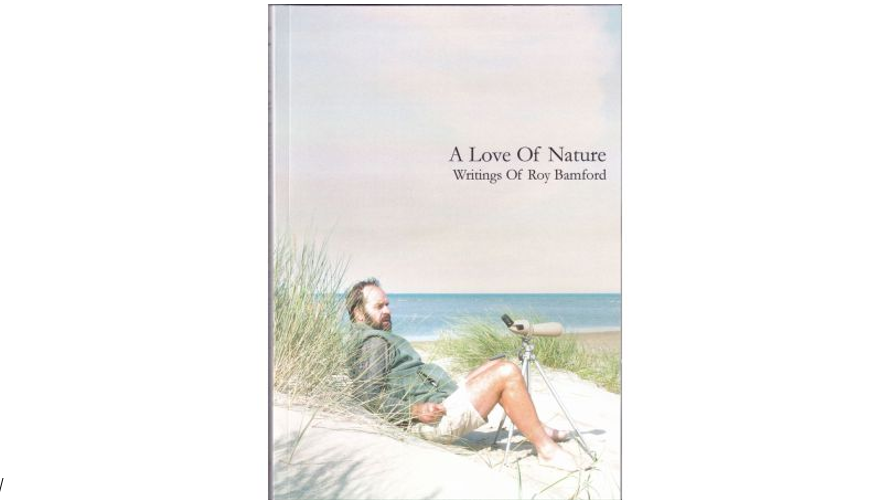
Writings of Roy Bamford
Gwyllt a Rhydd, 2023, 311 pages
Paperback: £9.95 | ISBN 978-1-3999-6666-5
Review by Mick Green
A Love of Nature is a classic country diary. It is a wonderfully varied selection of writings from a weekly country diary that the late naturalist Roy Bamford wrote for the west Wales newspaper The Cambrian News between 1984 and 2017.
Roy ended up in West Wales via a circuitous route from being a machinist at Rolls Royce, then moving onto contracts with the Forestry Commission and RSPB. He ended up as assistant warden to another great diarist, Bill Condry, who was then the warden at RSPB Ynyshir. Roy found his home here, raising a family in the same cottage where Bill Condry had lived when he started his celebrated Country Diary for the Guardian newspaper. After leaving RSPB Roy worked for a number of conservation organisations and at a field centre taking youngsters into the countryside that he knew and loved.
The book is arranged under a series of topics, such as ‘outings’, ‘species’, ‘political’, fieldwork’ and ‘seasons’. Like his mentor, Bill Condry, Roy’s writings cover a wide range of topics reflecting his knowledge and his passion for nature. The diary entries include minute, detailed observations on specific species and habitats, musings on the changing seasons and reflections on the lack of political support for Nature. His last article, published shortly before his premature death from cancer, was titled ‘Stop the World’, where Roy mused on changes in the world and our use of resources, and he pondered whether ‘sustainable development’ was possible.
Through his ‘outings’ Roy guides us up and down the Welsh coast, often on the spectacular Cambrian Coast Railway. He takes us to seabird cliffs, waders and waterfowl at Porthmadog, and finding peregrine and chough along the coast path near Borth on his home patch. He also takes us on a rare trip out of Wales to Lindisfarne in Northumberland. On all his outings Roy paints an evocative picture of the varied locations and wildlife.
His encounters with specific species cover a wide range of wildlife, from dormouse to woodcock. Each entry describes one or several observations, but also manages to slot in much background detail and his reflections, within the diary format’s short word count.
In the selections under the title ‘fieldwork’ we are taken into many wonderfully described situations that any fieldworker will be familiar with. From the joy of finding dormice in nestboxes, plant hunting with Bill Condry and a situation many of us have experienced… “Bird Ringing and Dodging Midges”.
If you know Wales the place descriptions are likely to cover familiar haunts, but if you don’t you will enjoy being taken there by such a diligent observer. The same is true of the species descriptions that brings the pages alive with Nature. The book finishes with an obituary of Roy, and a short selection of photographs of him in action.
This is a lovely selection of writings, chosen by Roy’s family, that deserves to become a classic of nature writing. It is a treat to dip into and there is always a relevant article, whether you are hunkered up in front of the fire on a winter evening, or sitting in the garden on a summer evening.
We’re extremely fortunate in Wales to have some great coastal nature reserves like Ynyshir and Ynys Llanddwyn. It was the latter’s warden – generally known only by his first name of Richard – who taught me that conservation could be not only interesting but also enjoyable. I was fortunate to discover a copy of Bill Condry’s ‘The Natural History of Wales’ (Collins New Naturalist Series) at the local bus stop book depository last year. What makes for ‘classic nature writing’ is an interesting subject in itself and this review certainly offers some key insights.