

Introduction – Context, Summary and Caveats
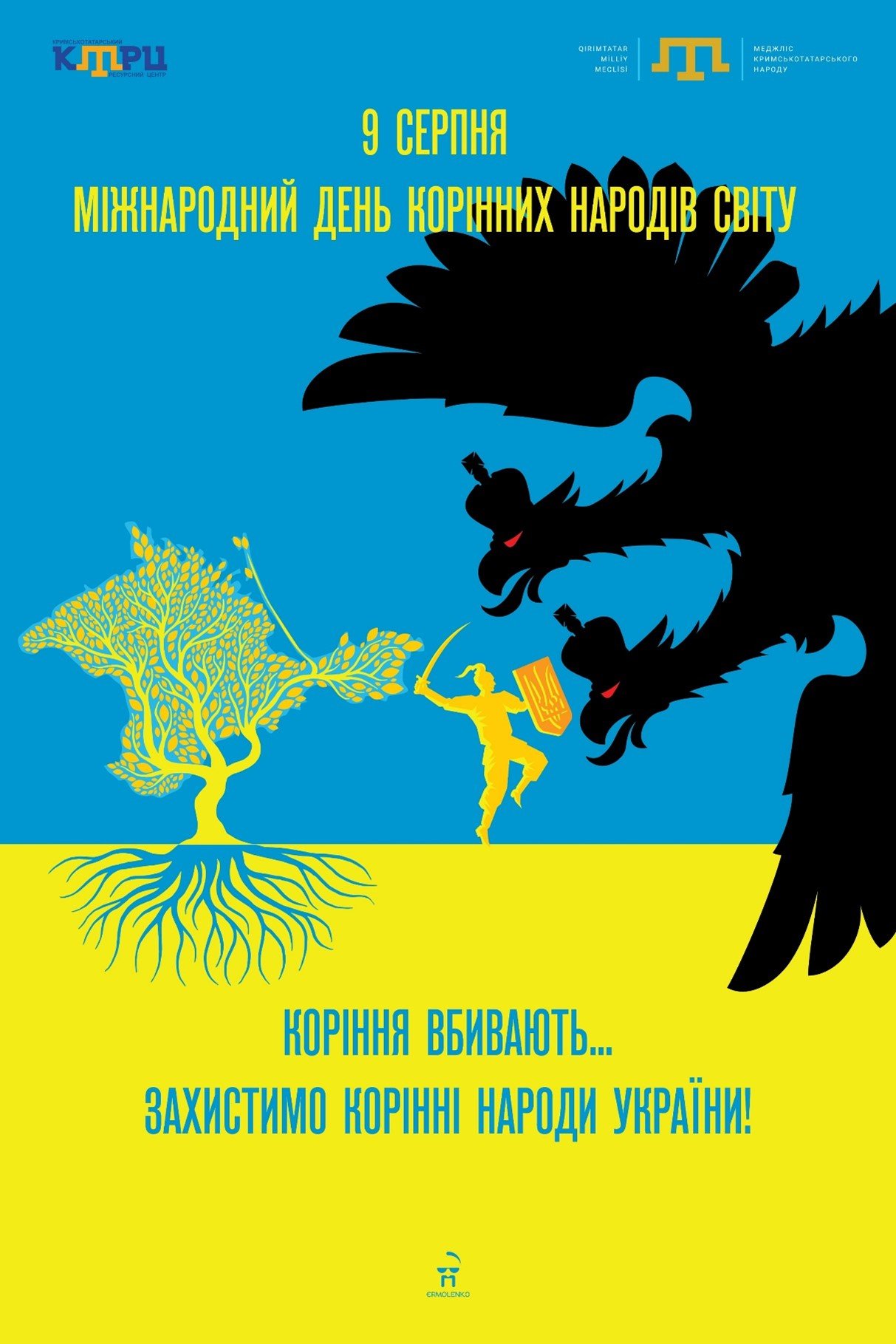
The immediate catalyst for this article series was Russia’s invasion of Ukraine on 24 February 2022. However, it should be remembered that “special military operations” started in 2014 with the annexation of Crimea, marking a return to European geopolitical conflict.1 Russia is now widely identified as the would-be coloniser of Ukrainian land and natural resources.2 This is certainly the view of indigenous Crimean Tatars for whom the environmental impacts of Russian militarization and development on land and sea following annexation of their peninsula home have been disastrous.3 To mark the International Day of the World’s Indigenous Peoples on 9 August 2022, the Crimean Tatar Resource Centre developed a Ukrainian poster campaign from which the image launching this article series is taken.4,5
In part based upon the experience of large-scale ecological restoration projects in Europe that evolved in the Post-Soviet Space, ECOS was an early advocate of rewilding in Britain and published extensively on this and related subjects from the early 2000s.6,7 The first article in the current series on the return of European transboundary conflict in Ukraine describes the impact of war on major existing and planned restoration programmes in border regions of the country. These have the support of international nature conservation enterprises, such as the UK-based Endangered Landscapes Programme managed by the Cambridge Conservation Initiative, and the importance of their roles are also discussed.
This involvement comes during an era when the colonialist origins and practices of “Big Conservation” sometimes attract criticism; and another article in the series will consider what might be termed the post-colonial trajectory of nature conservation in UK Overseas Territories.8,9 The work seeks to update an ECOS special issue developed with the UKOTS Conservation Forum in the late 1990s and revisits maritime areas across the globe that represent over 90% of biodiversity for which the UK government is responsible. 10,11
UN Decade on Ecosystem Restoration
The broader context for Conflict, Post-Colonialism and Conservation is of course the evolving framework for international nature protection and recovery in the UN Decade on Ecosystem Restoration 2021-30.12 In 2019, the Intergovernmental Science-Policy Platform on Biodiversity and Ecosystem Services (IPBES) identified “the five direct drivers of change in nature with the largest relative global impacts so far …. in descending order” as: “1 changes in land and sea use;2 direct exploitation of organisms;3 climate change; 4 pollution and5 invasive alien species” with significant differences between regions.13,14
Whilst it is important to emphasize “differences between regions;” for instance, invasive species are widely regarded as the main threat to native biodiversity on many islands (including Australia), changes in land and, increasingly, sea use remain the key driver of decline and a major factor in climate change.15 The global food system is generally accepted as the largest cause of nature loss, as described in a 2021 report by Chatham House supported by the UN Environment Programme (UNEP).16 Nevertheless, urban and industrial development, including decarbonisation technologies, remain key threats to ecosystems with natural resource extraction from land and sea currently forecast to increase exponentially.17
IPBES also highlighted the wider causes of nature’s “dangerous decline” and “unprecedented” species extinction rates:
Key indirect drivers include increased population and per capita consumption; technological innovation (linked to resource extraction, pollution, waste etc) …; and, critically, issues of governance and accountability. A pattern that emerges is one of global interconnectivity and ‘telecoupling’ – with resource extraction and production often occurring in one part of the world to satisfy the needs of distant consumers in other regions.”13,18
Since then, the rhetoric on global biodiversity loss has grown substantially, with the UK Government Office for Science recently admitting: “We’ve over-exploited the planet, now we need to change if we’re to survive.”19 Along with a trajectory of unsustainable development which threatens to overwhelm planetary boundaries, including biodiversity integrity, are the increasing threats of armed conflict and nuclear proliferation.20 Such threats are highlighted in the work of the Stockholm Resilience Centre and in a 2021 report by the International Union for the Conservation of Nature (IUCN).21,22
By way of illustrating this “global interconnectivity,” Russia’s full-scale invasion of Ukraine in February 2022 has led to suspension of the Artic Council at a time when many are predicting an escalating international race for the region’s natural resources.23,24 Chairmanship of the council is held from 2021-3 by the Russian Federation and there are widespread concerns that the Arctic could become another hotspot in the new cold war with the West.25 In August 2022, the United States announced the establishment of an “Ambassador-at-Large for the Arctic Region” with a remit to include “combatting climate change” and “promoting sustainable development.”26
Conservation geopolitics
Meanwhile, the roles of First Nations have become increasingly significant in conserving the natural environment of Arctic territories in ways that reflect Indigenous knowledge and culture.27 Greenland is also an “Overseas Country and Territory” of the European Union, despite voting to leave the bloc in 1982.28 From a conservation perspective, the OCTS, known too as EU Overseas, raise similar issues to the UK Overseas Territories; and their importance, particularly for marine biodiversity, is described in a major 2017 IUCN report.29 However, to date a High Seas Treaty for the conservation and sustainable use of Biodiversity Beyond National Jurisdiction, which makes up 70% of the oceans, has still not been mandated by the United Nations with the Arctic cited as a “divisive issue”.30,31
Whilst divisive issues all too often feature in the narrative of Conflict, Post-Colonialism and Conservation, these are by no means the only story. The overall aim of this ECOS article series is to consider both the negative, positive and frequently entangled trajectories of international nature conservation. Notably, conflicted discourses around the meaning of sustainable development have created a challenging environment for the implementation of global treaties such as the Convention on Biological Diversity.32 Although the story begins with the unprecedented challenges of war-torn Ukraine and their consequences for what are sometimes described as “conservation geopolitics,” the potential for nature to provide a focus for post-conflict/colonial consensus-building will also be extensively discussed.33,34
Conserving natural and cultural diversity
Future articles will explore themes such as the role of Indigenous land stewardship in Australian natural resource management, and provide case studies for reducing human-wildlife conflict in the rapidly developing nations of Africa and Asia.35,6 Through these, and indeed the series as a whole, it is also hoped to address the central question posed by a recent winner of the annual ECOS student article prize: “Does conservation have a diversity problem?”37 However, whilst the answer in Britain and elsewhere is undoubtedly “yes,” it is also complicated as evidenced by international comparisons.38,39 Russia, for instance, whilst an early adopter of largescale nature conservation, is described as a country that “colonised itself” and never developed a critical post-colonial perspective.40,41
Although the central aim of Conflict, Post-Colonialism and Conservation is to engage with a plurality of perspectives on challenging and sometimes controversial issues, important topics will inevitably be overlooked, both intentionally and not. Amongst subjects, therefore, that will not be covered is that of “colonial science.” The multi-disciplinary online Nature platform currently has a series of articles exploring this subject, including a 2021 editorial that declared: “Decolonising ecology and evolution is a long road.”38 Also a long road, with many a winding turn, is the global journey to a “Nature Positive” future.42
On a positive note, UNEP’s Learning for Nature website offers a wide range of courses which address many of the issues raised by this ECOS article series, including relationships between ecosystems restoration, climate adaptation/mitigation and sustainable development.43 Also tackled is the challenging question of how largescale nature conservation might support transboundary peace-building, a theme closely linked to the next article on Ukraine.44
Note
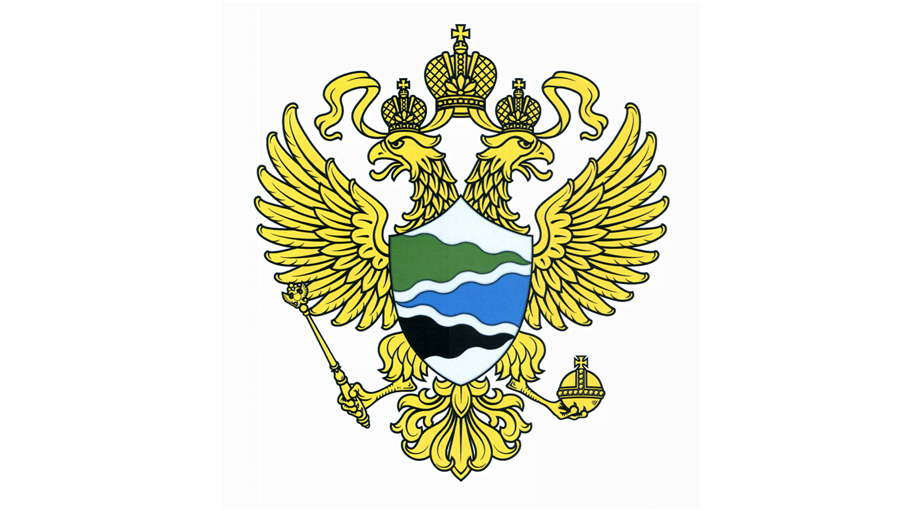
The feature image introducing this article series is the official emblem of Russia’s Ministry of Natural Resources and Environment. Its iconography belongs to the modern Russian Federation’s coat of arms and the country’s long and expansionist imperial history.45, 46
References
1 https://press.armywarcollege.edu/cgi/viewcontent.cgi?article=2917&context=parameters
2 https://neweasterneurope.eu/2022/07/01/colonialism-and-trauma-in-central-and-eastern-europe/
5 https://en.wikipedia.org/wiki/International_Day_of_the_World’s_Indigenous_Peoples
6 https://www.ecos.org.uk/ecos-405-book-review-rewilding-2
7 https://www.ecos.org.uk/wp-content/uploads/2015/02/Ecos-35-3-30-Rewilding-in-Britain.pdf
11 https://www.ukotcf.org.uk/wp-content/uploads/2020/04/EcosPienkowski1.pdf
12 https://www.decadeonrestoration.org/
13 https://ipbes.net/news/Media-Release-Global-Assessment
15 https://www.csiro.au/en/research/natural-environment/biodiversity/fighting-plagues-and-predators
17 https://www.unep.org/news-and-stories/story/were-gobbling-earths-resources-unsustainable-rate https://www.nrdc.org/stories/lithium-mining-leaving-chiles-indigenous-communities-high-and-dry-literally
18 https://en.wikipedia.org/wiki/Telecoupling
21 https://news.mongabay.com/2021/03/the-nine-boundaries-humanity-must-respect-to-keep-the-planet-habitable https://www.stockholmresilience.org/research/planetary-boundaries.html
22 https://portals.iucn.org/library/efiles/documents/NGW-001-En.pdf
23 https://www.arctic-council.org/
24 https://en.wikipedia.org/wiki/Arctic_resources_race
25. https://carnegieendowment.org/2021/03/29/russia-in-arctic-critical-examination-pub-84181
26 https://www.state.gov/establishing-an-ambassador-at-large-for-the-arctic-region
28 https://www.wilsonquarterly.com/quarterly/the-new-north/greenland-at-the-center-of-a-changing-arctic
29 https://portals.iucn.org/library/sites/library/files/documents/2017-047.pdf
30 https://highseasalliance.org/treatytracker/news/treaty-talks-end-without-resolution-in-new-york
31 https://www.bbc.co.uk/news/science-environment-62680423
33 https://cgforum.web.ox.ac.uk/what-conservation-geopolitics
34 https://conbio.onlinelibrary.wiley.com/doi/abs/10.1111/cobi.13238
36 https://tigers.panda.org/news_and_stories/stories/living_with_tigers_in_a_fast_changing_world
37 https://www.ecos.org.uk/undergraduate-winner-does-conservation-have-a-diversity-problem
39 https://www.nationalgeographic.com/science/article/russia-nature-reserves-year-ecology
41 https://doi.org/10.1038/s41559-021-01549-2 Nat Ecol Evol 5, 1187 (2021)
42 https://doi.org/10.1038/s41559-022-01845-5 Milner-Gulland, E.J. Don’t dilute the term Nature Positive. Nat Ecol Evol (2022)
43 https://www.learningfornature.org/en
44 https://www.learningfornature.org/en/courses/peace-park-development-and-management
45 https://en.wikipedia.org/wiki/Ministry_of_Natural_Resources_and_Environment_(Russia)
46 http://duma.gov.ru/en/news/28991