

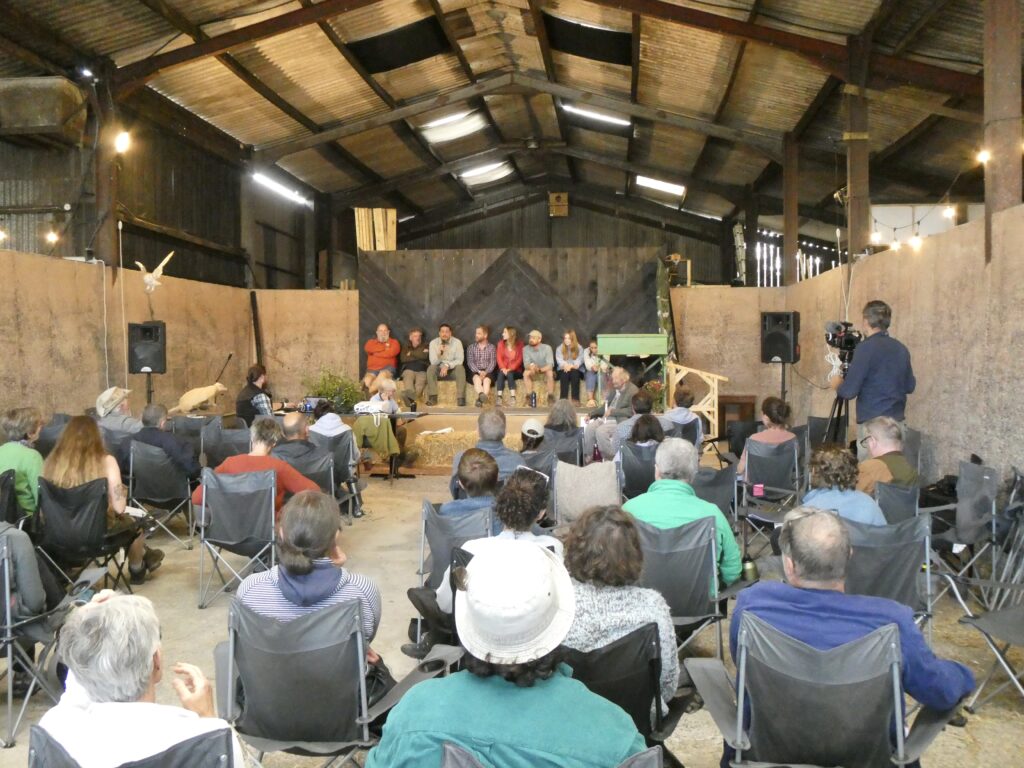
A review of the 4th annual conference at Rewilding Coombeshead, Devon, July 2026
JAMIE BUXTON-GOULD
A large pile of ripe manure blocking the entrance of the Strawditorium heralded the morning of the If Not Now, When? Rewilding conference and festival. Dumped by a disgruntled neighbouring farmer, this disruptive act highlights the extreme divergence of opinions around the subject and epitomised the rural divide here. Just the word rewilding can provoke, pique interest and start a lively conversation.
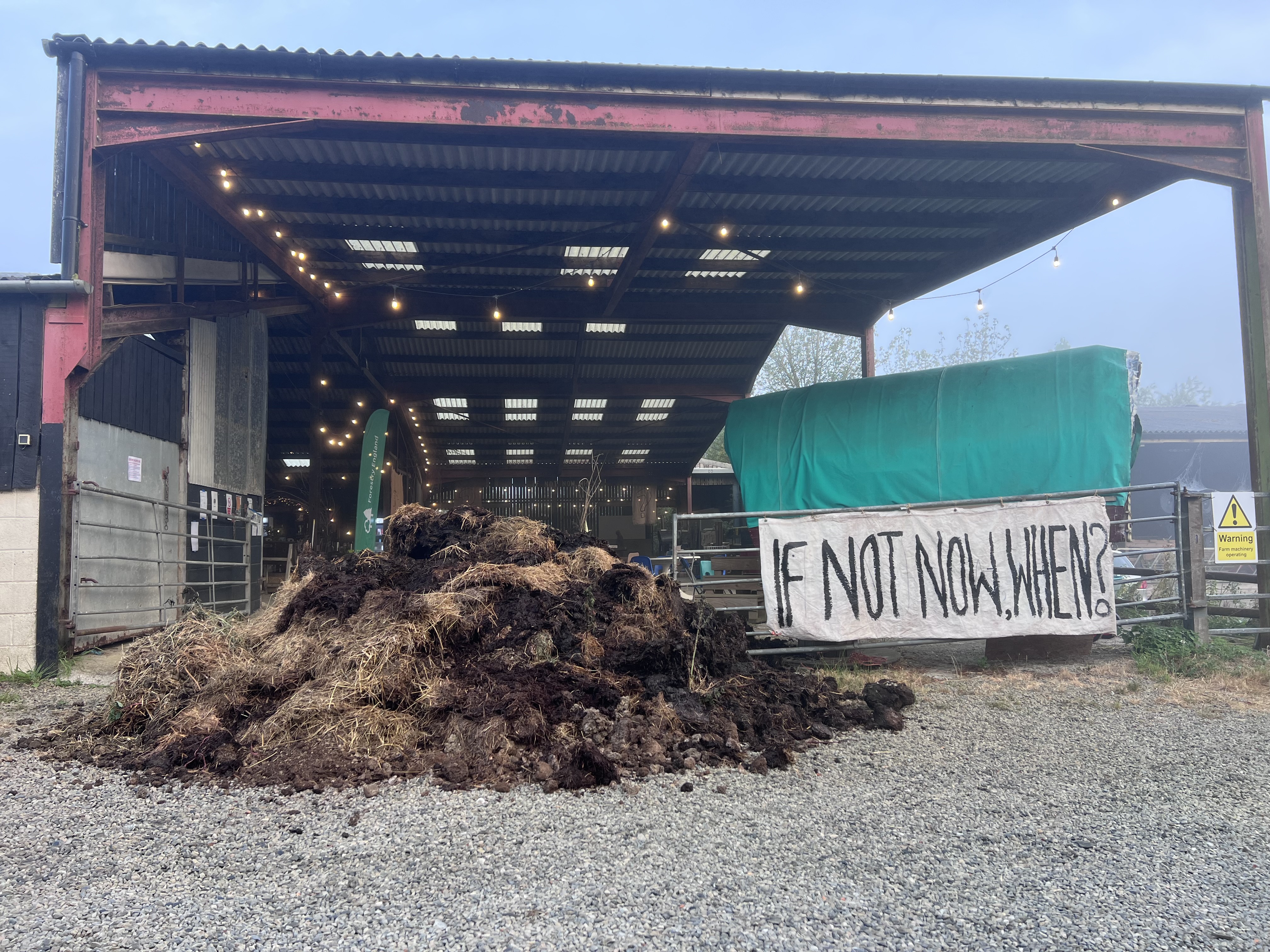
Photo credit: Nick Viney
Hidden away down Devon’s winding lanes, Derek Gow’s Rewilding Coombeshead farm was the venue for the fourth If Not Now, When? event. Gaining momentum each year, this novel ‘conference in a barn’ brings together nature conservationists from the UK and overseas to challenge, explore and discuss the subjects of ecological restoration and species recovery.
This year’s speaker included renowned conservationists such as Sir John Lister-Kaye, Ted Green, Jill Butler and Roy Dennis OBE, who had just released white-tailed eagles on Exmoor a few days before. The diverse range of presentations included:
- Bev Nichols, Forestry England – Designated sites: from nature conservation to nature recovery.
- David Satori – Charismatic Megafunga: A foray through the world of fungal conservation.
- John Walters – Conservation of the Blue Ground Beetle and other invertebrates.
- Sam Manning – Flowscape: The hidden connections between oceans and forests.
- Noortje Looijenga – Rewilding with Insects: A New Perspective on Nature Conservation
- Nigel Hand – Why The Adder Didn’t Cross The Road
- Hugh Warwick – Cull of the Wild – Killing in the Name of Conservation
- Paul Whitfield – The Future of Bison Rewilding in the UK
- Tom Bowser – Waters of Life: Fighting for Scotland’s Beavers.
- Chantal Lyons – Preview of Once There Were Giants: The Past, Present, and Future of Megafauna
- Marc Wilbers – Wolf. Co-existence. Polarisation
- Will Hawkes – The Most Remarkable Migrants
- Amy Fitzmaurice, Forestry England – Workshop: From Conflict to Coexistence
The pile of manure was swiftly cleared by another of Derek’s neighbours, as he shrugged it off with good humour, accepting that reactions such as this can happen when you take radical steps such as rewilding. As Johnny Rotten said: “If you are p***ing people off, you know you are doing something right.”
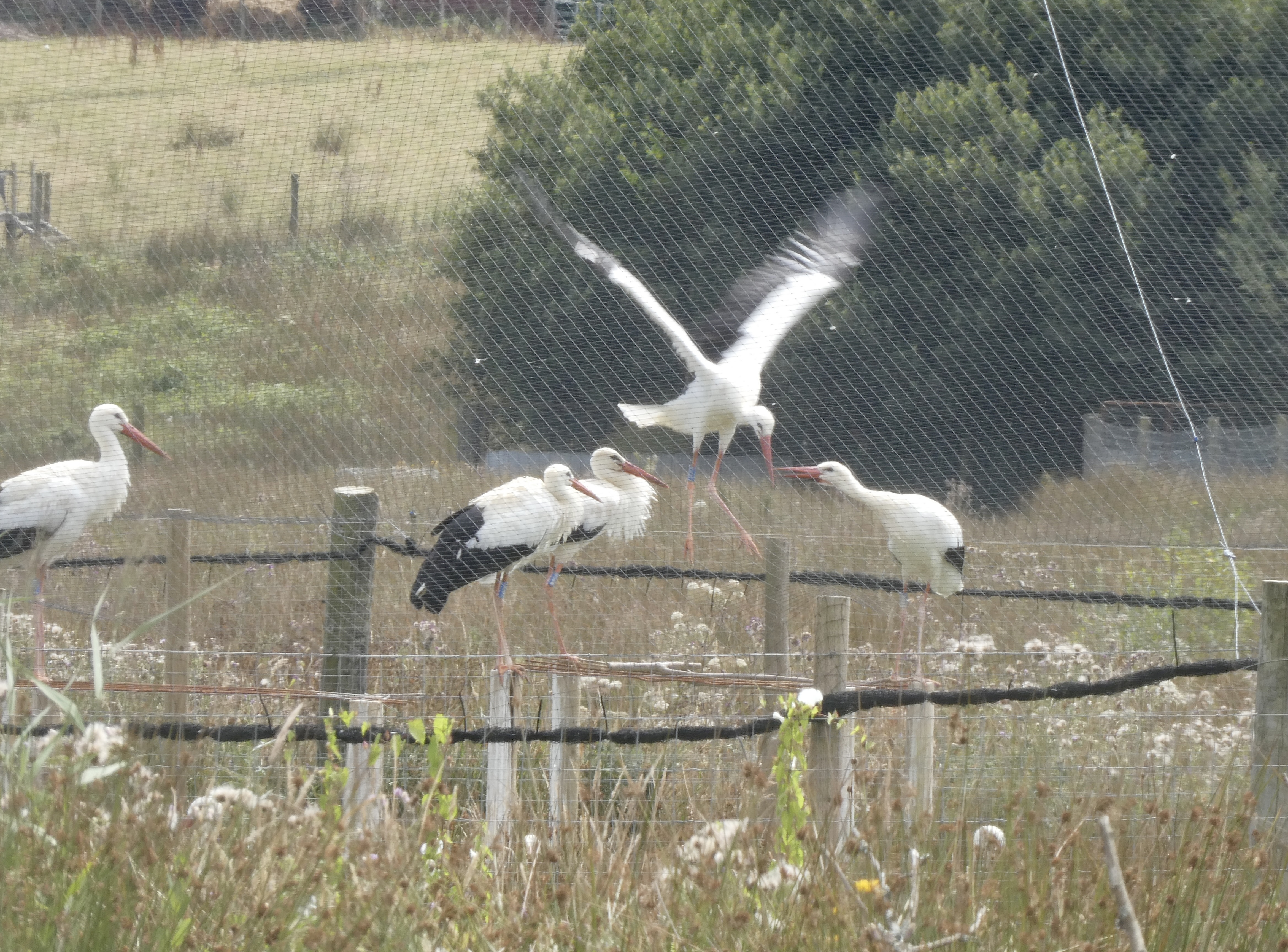
That evening, the Derek vs Derek documentary was screened. A link to the trailer is here. It explores the contrasts between Derek Gow’s rewilded land and Derek Banbury’s conventional dairy farm, revealing the divergence of mindsets and debating these different options for rural landscapes. It continues an important conversation between both sides of the debate, that could be a catalyst towards greater cooperation and acceptance of nature conservation alongside food production. This was particularly apt considering the theme of the conference was Coexistence. Derek Gow’s satisfaction with the transformation of his land was evident: “When you’re walking through the culm grassland and the clouds of butterflies come up, you’re walking back into a landscape that would have been familiar to a neolithic person.” Derek Banbury even conceded: “I’m trying to feed the nation and Derek’s trying to make things survive”.
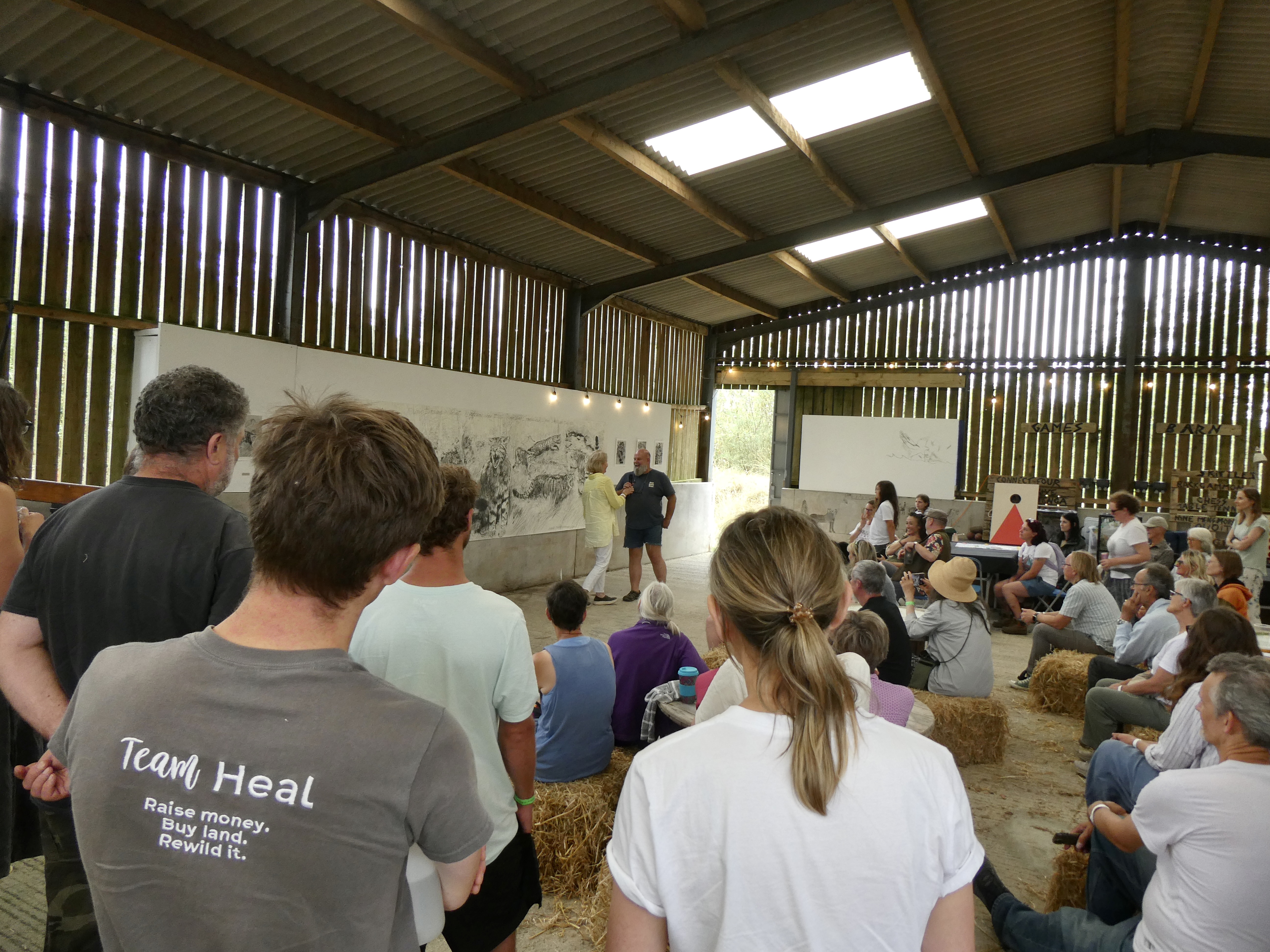
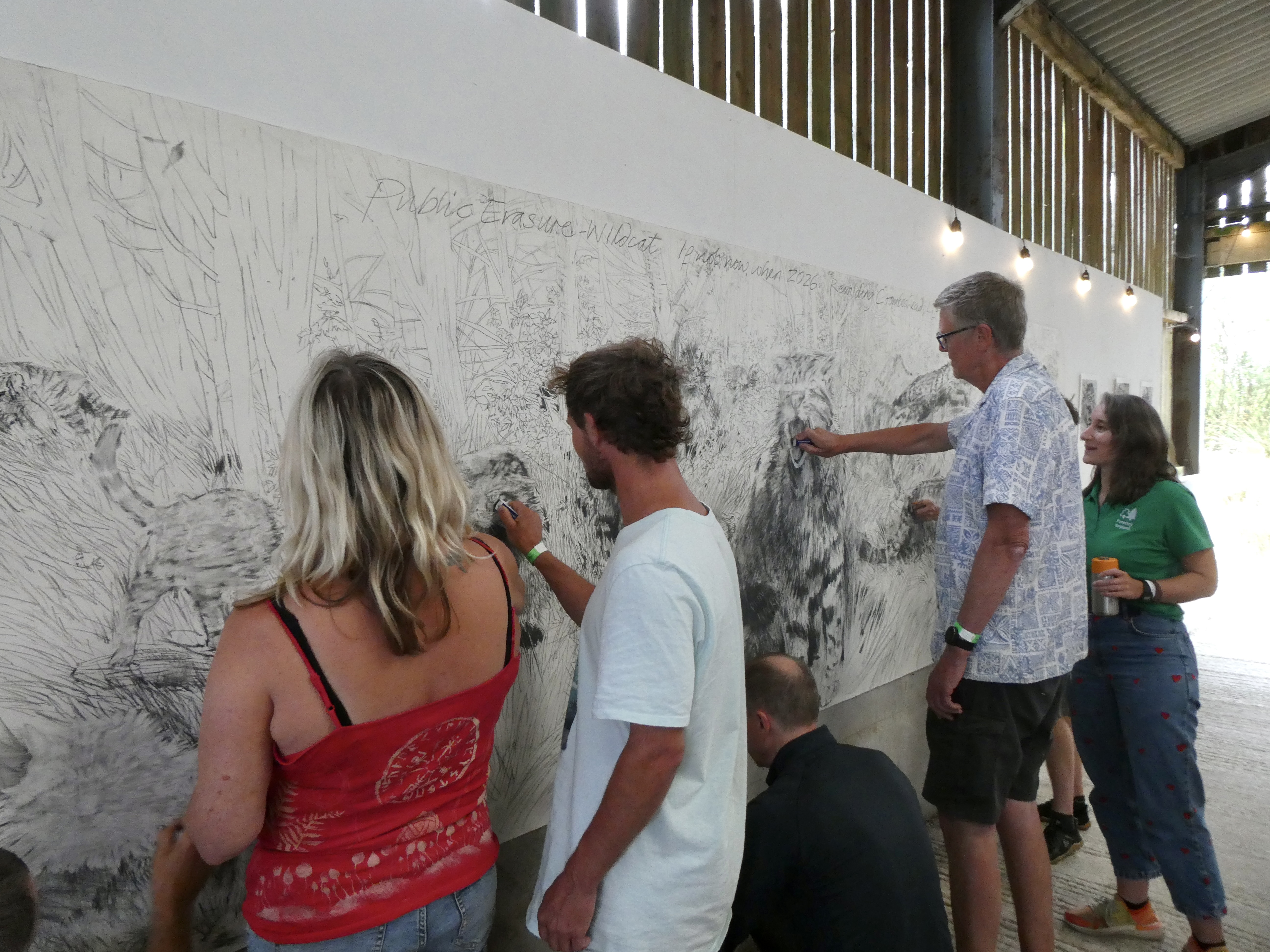
Set in the large barns close to the Species Recovery Centre, the venue for If Not Now, When? had a welcoming, intimate feel, where everyone has the chance to talk to each other; I met people for whom this was their fourth time in attendance. There was the opportunity to discuss the pertinent issues in conservation with experts in person, as well as witness rewilding in action by stepping outside to see wildcats, water buffalo, turtle doves, harvest mice and white storks. Art was on display by creatives such as John Walters, Rebecca Howard and Frances Gynn, whose piece entitled ‘Public Erasure’ invited everyone to participate in erasing an evocative mural of wildcats. Part of a series of interactive artworks, Gynn has created large, detailed charcoal and graphite drawings of endangered species, which are then erased by the public as they are exhibited: carefully drawn whiskers, eyes, expressions are reduced to smudges and blank spots. With the rustic atmosphere, I certainly felt much more at home attending a conference in a barn, with dusty boots welcome and the chirping of house sparrows a constant backdrop to each presentation.
Beginnings of bio-abundance
Dense swathes of bracken marching across vulnerable habitats presents one of the many challenges for land managers in the UK. However, an ally has arrived in the form of the European bison. This was something that has to be seen to be believed, with Paul Whitfield (Director General of the Wildwood Trust) showing a clip of a bison happily tucking into fresh, green bracken fronds during his presentation. None of our other large herbivores have an effect quite like bison do. Powerful and unique, they shape the land at a scale and pace that cows can’t quite match. They carve out paths through the woods, creating valuable dead wood, dispersing seeds, producing dung and shedding hair that provides superior insulating properties for nesting birds. Multiple niches in the making for multitudes of species. Noortje Looijenga also emphasised the importance of bull pits for creating bowls of bare ground that are colonised by an array of insects, such as nesting solitary bees and wasps. Their positive ecological impacts are clear, but multiple barriers in the form of licensing, costs, politics and disease-risk mean their deployment at a wider scale has almost stalled. Looking across Europe, it’s evident that they are ahead of us with species restoration; countries including the Netherlands, Germany, Switzerland, Spain, Poland and Romania all have bison herds. The challenge is how do we implement rewilding in this country, and how wild will it really be with such a human-modified landscape and fragmented habitats?
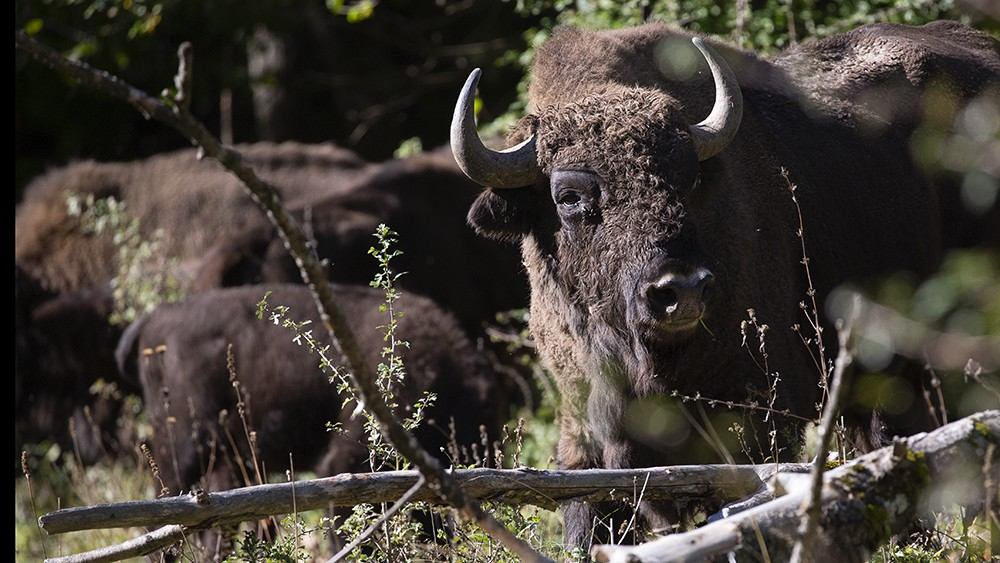
Photo credit: Wessex Wildlife Photography
The first wild bison in 6,000 years were released four years ago in Blean wood, Kent, and following the success of this project, a small herd has recently been released at the Solway Wild Lands project in Cumbria. Not only a woodland species, bison will happily live on dunes, heathland, scrub and grasslands, creating habitat mosaics. “Bison are architects of complexity; the future of conservation is restoring that complexity” Paul emphasised that to keep the forward momentum, we need to secure genetics, build a meta-population here in the UK, change unnecessarily restrictive regulation and make projects more affordable. Bison have been received positively, giving many people optimism and hope; I know I experienced a new feeling of possibility when I saw the first bison calf born in the UK in 2022.
The importance of bovine ecosystem engineers was a key theme in Roy Dennis’s speech, as he explained how Highland cattle are closest genetically to extinct aurochs, and how he finally persuaded the RSPB to graze cattle in their forests. In his opinion, a woodland without well-managed big grazing animals is “a disaster for wildlife”. Many bird species, including capercaillie and woodcock will follow a cow’s path through the heather and woods, finding a rich food source within their dung. Without their path creation, nothing can get through the impenetrable barrier of tall heather. Breaking open and grazing on dense vegetation can also create natural firebreaks in the landscape.1 Roy does not shy away from expressing the urgency of the situation and how we need to challenge strict rules and regulations to make headway with large-scale rewilding. These frustrations were echoed by Paul, with enormous difficulties in accessing the European breeding program for bison and resistance from government advisors impeding progress. Someone in the audience questioned the efficacy of bison compared to cattle, with Paul explaining that a new paper soon to be released will detail their specific impacts and behaviours.
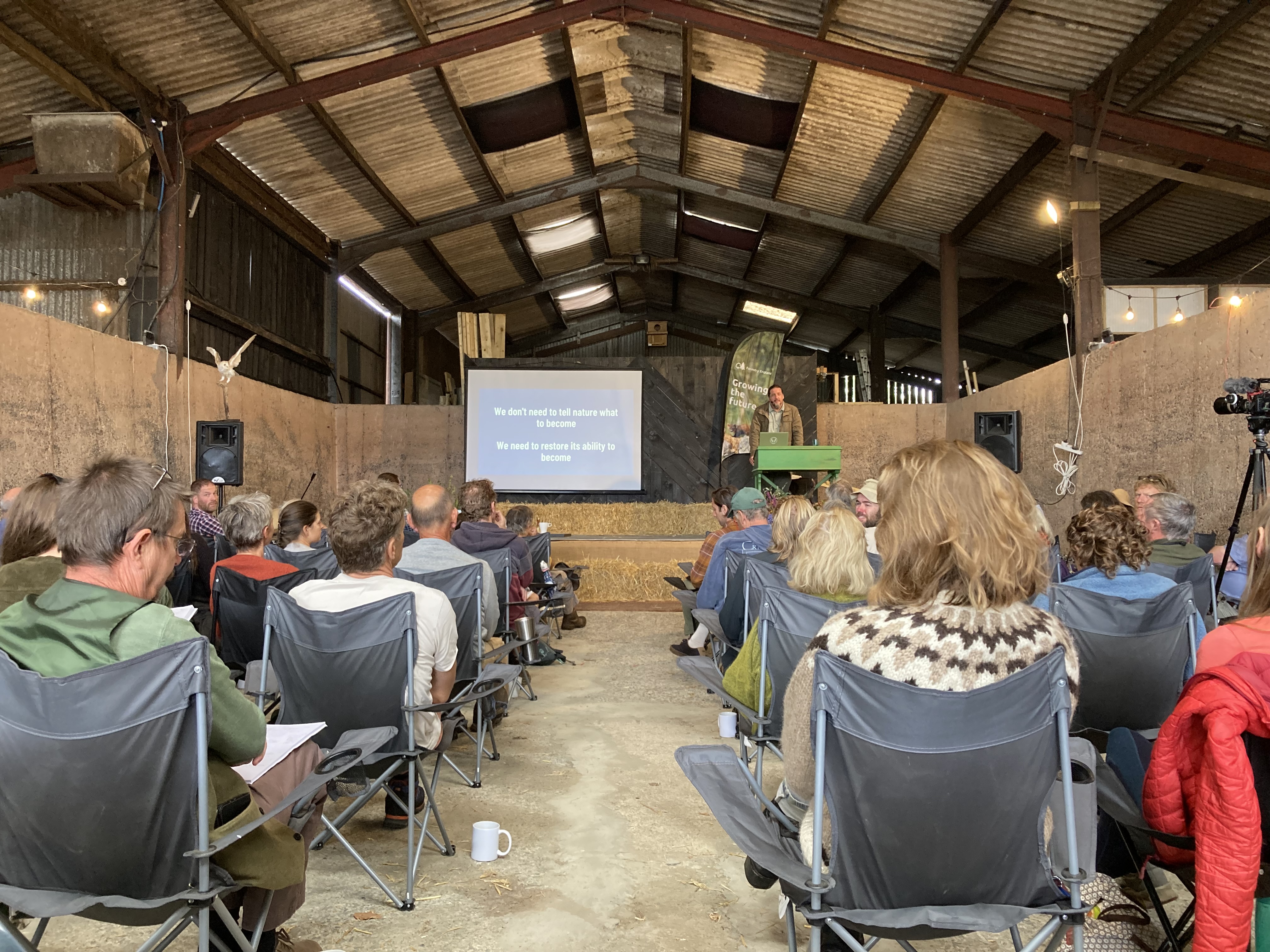
A recurring reflection from a number of the speakers was of their experience of major obstacles ranging from inaction to hostility from nature organisations when trying to move forward with conservation projects. Derek is outspoken in his exasperation at the decades of failure to release beavers. Is there an art to convincing; do conservationists face the biggest challenges from people supposedly on the same side?
The difference between life and death
Tom Bowser’s beaver story was truly uplifting and inspiring. A deep desire to relocate beavers from arable conflict zones in eastern Scotland to his family farm in Perthshire proved to be a real mountain to climb, as he was the first private landowner to do so. Acknowledging that undertaking a small act to help nature can be really tough, Tom applied to NatureScot for a beaver translocation as an alternative to planned licensed beaver culls. The process involved filling out endless forms, consulting local and national stakeholders, and waiting for some political will to shift in his favour. The response to his consultation was extremely positive, with local businesses, schools, universities and some landowners all expressing support. Finally, the application to move the beavers was approved and with the help of the Beaver Trust they arrived in 2021. Despite the wider public support, Tom’s battle was a lonely one, highlighting the bureaucratic inefficiencies that seem to have characterised species recovery.
Tom gave some insights into the behaviour of his beavers and how they are now shaping the land around them. Water now flows in places that have been dry for centuries and amphibians, pollinators and other insects are all increasing. Their engineering activities shone through, meeting the challenge of both droughts and floods of recent years: Tom illustrated how in dry summers, the beavers dredged the bottoms of the ponds and channels, ensuring to keep water deep. In wet winters, they constantly worked to dam the water, moving downstream and creating a series of dams that drastically reduced the spate that used to rush downhill and flood his barns. Trees and ponds had been tried before as possible solutions, but these alone didn’t solve the problem. Biogenic elements are much-needed and scarce across our landscapes that are so vulnerable to extreme weather. Having already established the Argaty Red Kite project, the next generation accepts that regularly seeing red kites is the norm, and now Tom hopes, the same will become true of beavers: “We accept that beavers are in control of our waterways and that whatever comes next will be better than what came before.”
From land to sea
Sam Manning from the Woodland Trust spoke about his deep exploration of the reciprocal relationships between seas, rivers and forests. Forest loss on land is mirrored in the seas through ocean desertification, disappearance of kelp forests and collapsing fish populations. Many rivers are lacking the vital biogenic layers of trees and beaver dams that can trap silt that protect seagrasses and kelps.
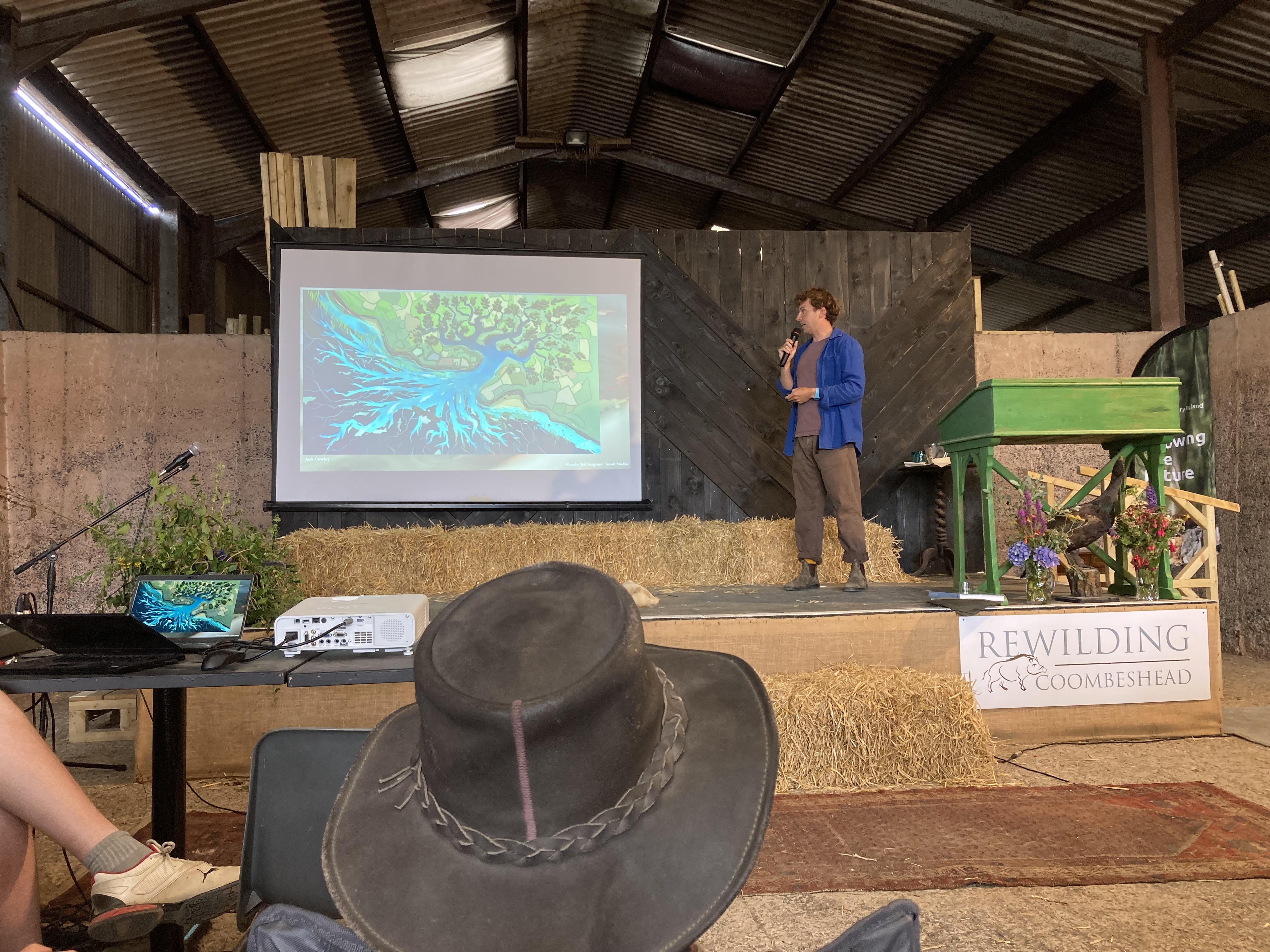
Working on his upcoming book, Flowscape: the hidden connections between oceans and forests, his talk ranged across land and seascapes, gleaning valuable lessons from other cultures with deep connections to their natural heritage. We are just scratching the surface of the complexities of the intertwined nature of relationships through temperate rainforest cultures, from the Canadian First Nations people to Japanese fishermen. A 2,000 year old Japanese proverb says: “If you want to catch a fish, plant a tree.” A conservation movement spearheaded by ‘Grandpa Oyster’ in Japan mobilised the local fishing community to plant Fish Forests or “Uotsuki-rin”, These trees build rich soils, allowing fulvic acids to percolate through (like a teabag) into the oceans, gradually releasing nutrients essential for plankton growth and a healthy marine food web. Fish stocks have increased following forest restoration, with studies demonstrating plankton biomass to be ten times greater in estuaries with forests.
Looking beyond biodiversity towards wider ecosystem function can expand our horizons and lead to greater collaborative working. Today, organisations such as the Woodland Trust and the West Country Rivers Trust work together to link forests and watercourses as connected entities. Sam outlined some examples in the UK of reinstating waterways and wetlands through Stage zero restoration, with rapid results. He also pointed out the importance of a catchment-scale and even country-wide approach of tree planting; a recent study showed that by expanding tree cover along the western edge of the UK, evapotranspiration could lead to greater rainfall in the east, benefitting crop-growing regions. Re-visiting ancient traditions could be instrumental in re-framing our relationship with the land and sea. How do we best manage those resources that shift from an extractive to a regenerative approach?
All the small things
It was heartening to hear from young, passionate conservationists alongside the wise, old sages within the nature community. Oliver Crowther is breeding rare species including red-backed shrikes and lapwings to restore species and populations that have been lost. This of course requires the restoration of insect-rich habitats to sustain the birds. Noortje Looijenga is breeding mole crickets: a species that aerates compacted soils and can help rebuild depleted soil fauna, as well as being an important food source for other species. She emphasised the many roles of insects in ecosystems: how something small can actually have profound impacts on its ecosystem.
Hoping to rekindle our care and interest in insects as key elements of rewilding, Will Hawkes’ showed how new research is emerging on the importance of connectedness for insect conservation; as they have been found to cross continents in vast numbers, pollinating and exploiting seasonal niches. The studies on insects and their incredible migrations was fascinating and contained some mind-boggling numbers. Insects numbering into the trillions migrate each season across Mali; 3.5 trillion insects migrate over southern England each year and 3,600 insects per meter per minute have been counted flying through a Pyrenean mountain pass. Flies accounted for some of the most numerous migratory insects, with hoverflies even carrying 40 billion pollen grains to the UK.
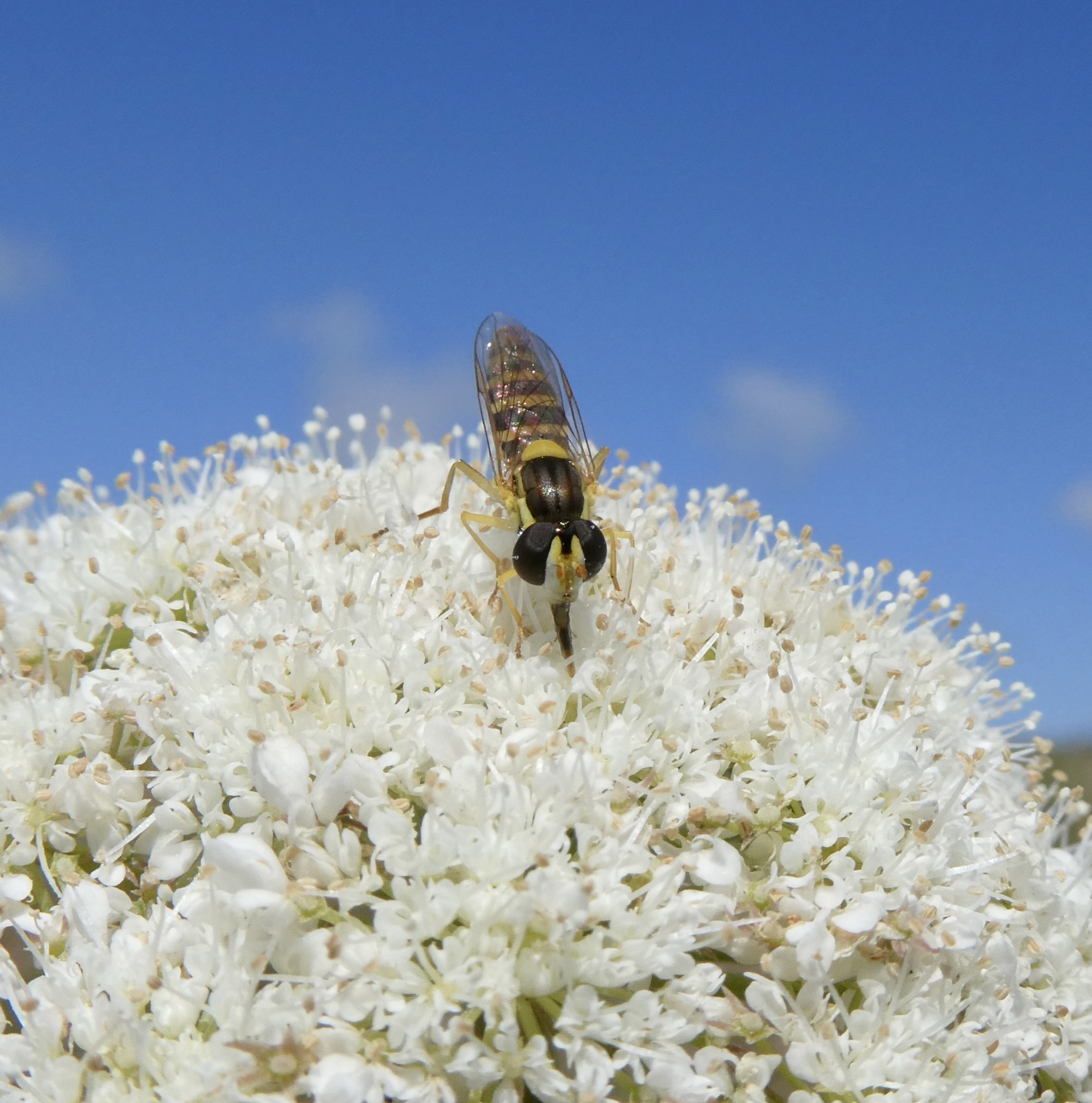
Narrowing our focus onto some of the smallest elements within ecosystems adds another layer to rewilding objectives. Despite population declines, insects have the ability to rapidly reproduce and have the capacity to respond if we consider them as part of conservation plans. I believe the twin-pronged approach of species reintroductions alongside habitat restoration is going to be the most viable solution in highly degraded landscapes. We have species whose populations are so fragile, for example; adders, turtle doves and wood white butterflies, that local extinction is likely through loss of genetic diversity, potential catastrophic events and even badly timed vegetation management. I know of populations of some rare species that are barely clinging on: tiny numbers of individuals on the brink managed with a fortress conservation approach. Looking to the future, I can’t see this being a viable option to save the species. Embracing a more radical and holistic approach is possible, as is evident from Forestry England’s strategies for nature recovery.
Changing mindsets
Bev Nichols from Forestry England explained how they are embracing a new approach for nature recovery planning; embracing species recovery and rewilding mindsets. Outdated, production forestry monocultures are being phased out in favour of diverse planting and habitat restoration to cultivate greater resilience, producing wildlife alongside timber. Tree gurus Ted Green and Jill Butler, both passionate about conserving these ancient organisms, spoke about the importance of open-grown trees for wildlife and that we should be celebrating our mega-plants the same as we revere megafauna. Exasperated by the persistence of planting large blocks of trees too close together that will be “lifeless” in 20 years, they are keen to communicate the importance of open landscapes and their biological richness. Terminology is important here, with woodland deemed to be unsuitable as a habitat description; “European temperate old-growth savannah” is their intriguing name of choice, which although verbose, does better convey an image of the biologically diverse prehistoric landscape we need to see emulated. Perhaps “wood pasture” is more effective. Either way, if we want to support the majority (over 80%) of European plants that are light-demanding, shifting away from a mindset of dense, closed canopy forest is important if we are to create habitat mosaics and the mega-trees of the future.
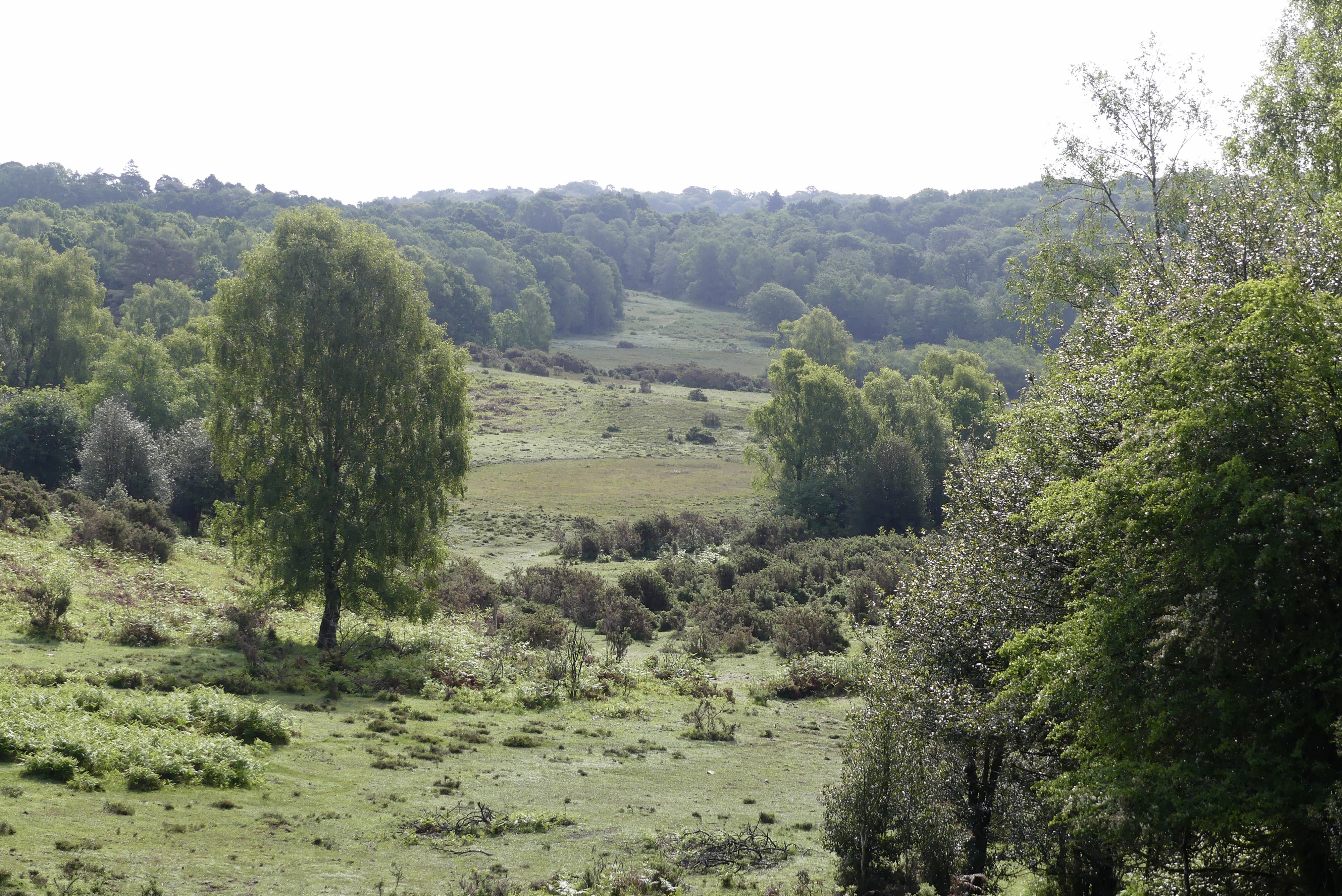
The conference shone a light on the hostility and forces of opposition when reintroducing species and restoring landscapes. How do we find compromise? Attitudes can shift over time, with some species such as beavers becoming more widely accepted by some groups. The theme of our absent large carnivores is often synonymous with rewilding, and Marc Wilbers explained the importance of education and pre-emptive management in parts of Europe where people live alongside wolves. Chantal Lyons explored the realities of living alongside large animals and the impossibilities of divorcing coexistence with wider social and economic equality. I felt it was vital to reflect on cultures that steward high levels of biodiversity, with tolerance and acceptance more ingrained, such as in Nepal. Can we relearn the experience of living alongside megafauna in this country?
For many projects is was apparent that the biggest challenges can come from within the conservation industry. Other opposing voices will be entrenched in their mindsets and never change. Choosing the most promising avenues for success is wise. We need strong-willed. We need stubborn. I observed how the rare species breeding programs are accelerating at Rewilding Coombeshead; how the rate of species recoveries aims to keep pace with the urgency of the environmental crisis with little hesitation. Derek explained to me his frustration with inaction, at having endless fruitless meetings and his desire to be proactive and understand priorities, as the amount of life we have lost from our landscape leaves him little choice. I know from experience that impatience and persistence can lead to results.
This sense of urgency demonstrated by Derek and others working towards nature recovery is justified in my opinion. If we don’t start to turn the tide for some of our fastest declining species, when will we? It will be infinitely harder to reintroduce species once they have disappeared from our island. However, reintroductions do require a nuanced and balanced conversation; Roy Dennis expressed how we need to think seriously about some species such as pine martens and badgers that can have negative effects on vulnerable species such as ground nesting birds if their populations reach high densities. Our challenge now is determining how we maintain a balance?
This event did not shy away from a complete embrace of rewilding. Although some attendees appeared to be more inclined to slower, more cautious strategies for nature restoration, others favoured the all guns blazing approach. Rewilding can spark endless debates and be a contentious term, however, I think there is space for a nuanced conversation with landowners. From soil regeneration to reintroductions of large herbivores, all these actions encompass elements on the rewilding spectrum, whatever terminology we use to frame it.
Pushing the boundaries
Considering the state of nature can conjure feelings of dread and desperation, but at If Not Now, When? this was tempered by stories of positivity: recovery in action, however small, can create hope. Bev Nichols said how he used to go to conferences and feel depressed, but now he feels excited after attending something like this. Closing the weekend, Derek Gow summarised the conference as a celebration of joy, with the ambition to continue to hold one with passion and humour each year. He spoke about how “stories matter so much”, and “it has to be about the little people doing what is right”. These stories capture the imagination; whilst the underpinning scientific data is vital, the tales of individuals, both human and non-human, weave a powerful narrative. I was struck by how often it can be just a single person who is pivotal in setting nature recovery in motion. Those determined and dedicated people become pioneers that forge the paths we will follow in the future.
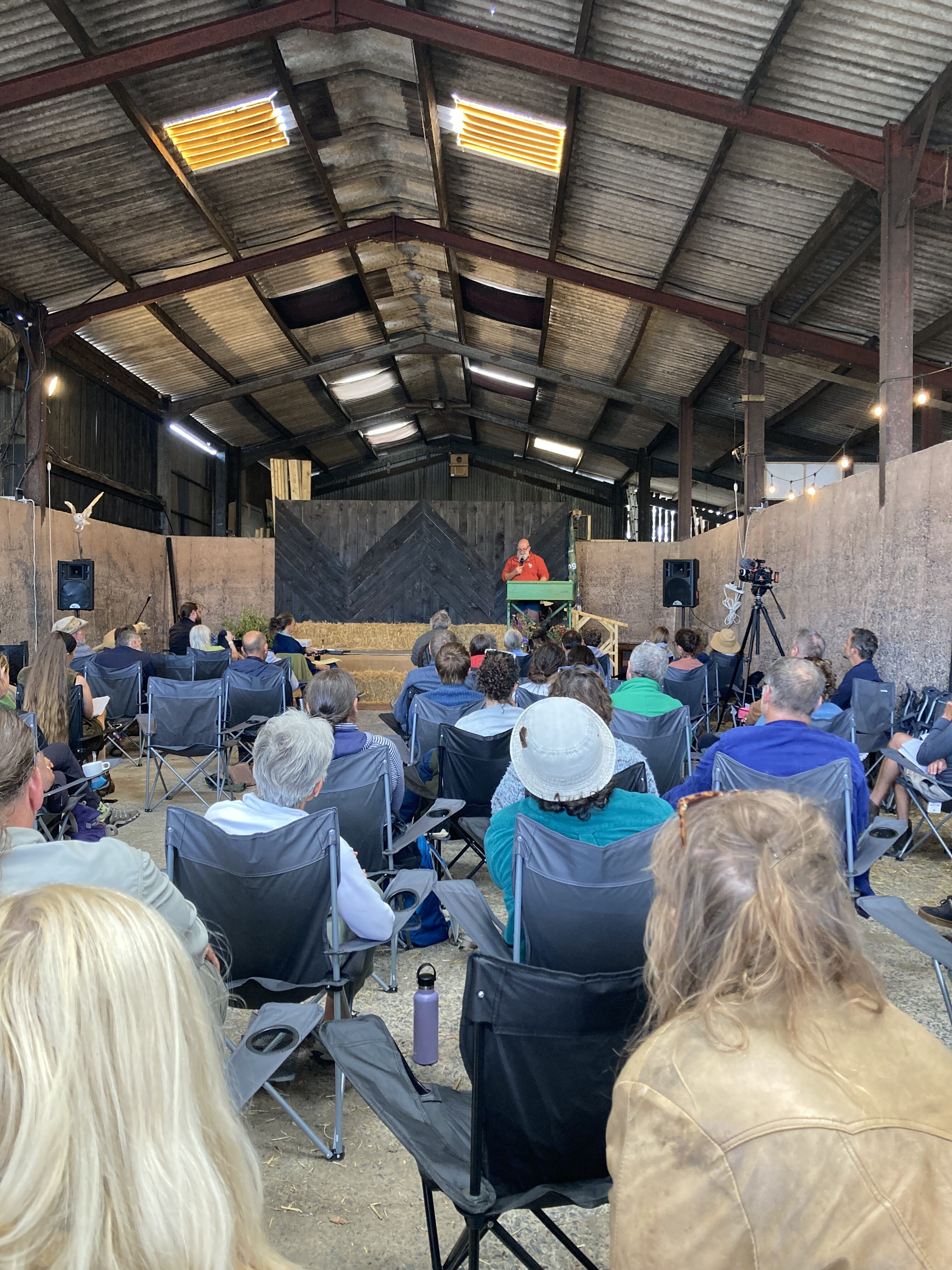
Here in this barn, there was a meeting of minds that are pushing the boundaries of nature conservation. United with a shared aspiration for a richer, wilder world, there is an eagerness for change. Among the attendees, there were people with years of experience in different areas of conservation alongside young people at the start of their careers, as well as researchers, wildlife photographers and landowners. Dorette Engi, a local landowner who is restoring nature on her own land questioned the interventionist approach, saying that “we should not be teaching rewilding; let nature teach us!” Nature conservation can often feel like an uphill battle, with hostility and opposing forces frustrating our best efforts. But there are glimmers of hope that I anticipate will shine a little brighter when next year’s conference comes around.
References
- Dennis, R (2025) The Highland Cow and the Horse of the Woods, Whittles Publishing (Porto Press).
Jamie Buxton-Gould is an ecological consultant. jbuxtongouldwildlife.com