

Thoughts from influential nature conservationists…
MIKE PIENKOWSKI
Career Highlights
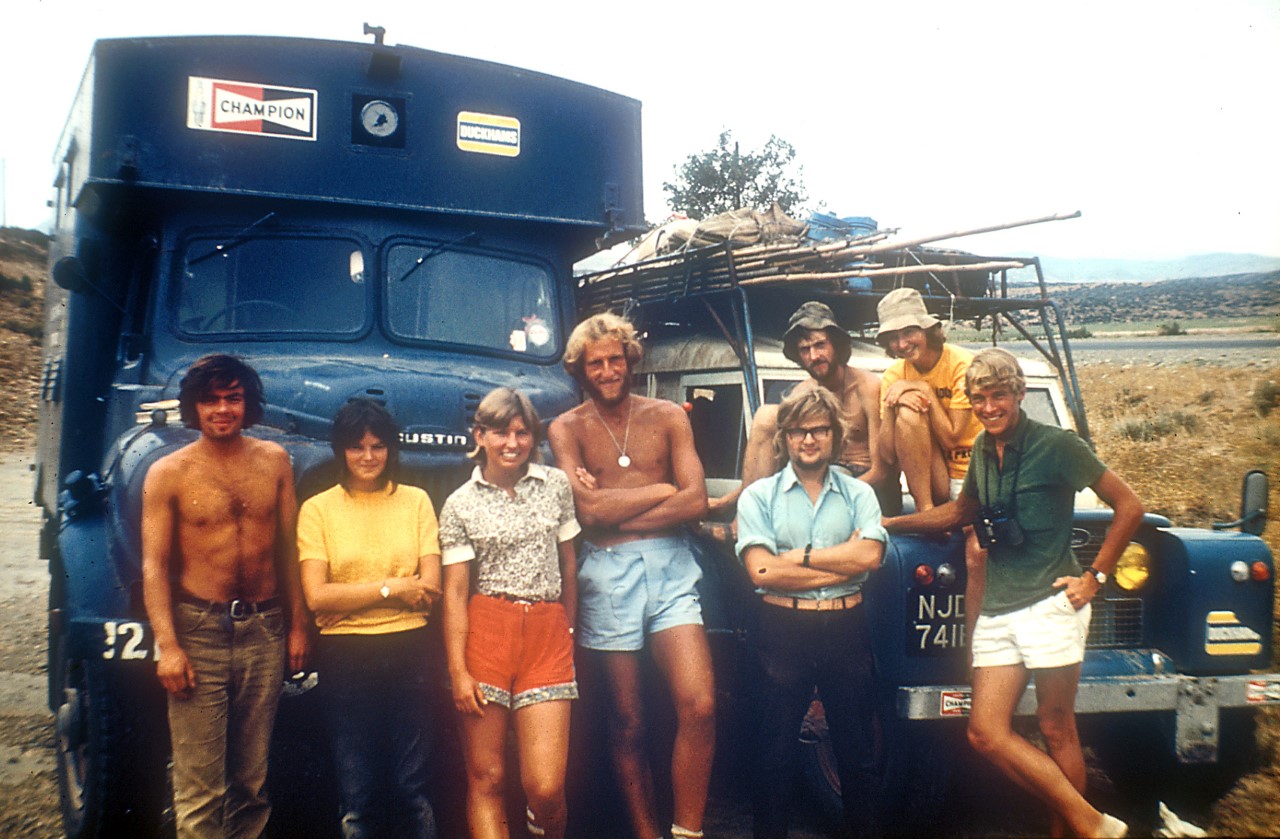
A pre-university interest in shorebirds and their spectacular migrations – and bizarre variety of mating systems – resulted in my leading undergraduate and postgraduate expeditions to Iceland, Morocco and Greenland, as well as chairing an international conference in Odessa at the time of the breakup of the Soviet Union on international cooperation – some of which worked! As Head of Ornithology at the statutory Nature Conservancy Council and later first Director of its successor body the Joint Nature Conservation Committee (JNCC), I negotiated and managed government contracts with the BTO, supervised the Seabirds at Sea Team and initiated studies on moorland birds, leading to the major battle over the Flow Country of northern Scotland and, more collegially, higher regard for traditionally managed farmland and the start of the restoration of red kites across Britain. For over 20 years, since retirement, I have volunteered for the UK Overseas Territories Conservation Forum.
How do you define nature conservation?
At its core, nature conservation is about maintaining or restoring natural processes, especially to facilitate the continued existence of as wide a range of species as possible in numbers and ranges which mean their continued existence is not threatened. In a wider context, it is about making human use of the environment as compatible as possible with these natural processes – usually with a side-benefit of cost-saving to whatever human activity is involved. Whilst protected areas, where nature has priority, are a key, sustainable use means that natural processes and wildlife exist also in areas where conservation is not the first priority. This also underlines the essential involvement of human communities in pursuing conservation.
It is important to be guided by agreed objectives, rather than by the methods used. At all stages, knowledge – both scientific and learnt by experience – should be deployed. I like the idea of “elegance” in the sense that human intervention to restore natural processes should be enough to allow nature to take over as much as possible, rather than pursued forever. A good deal of creativity, as well as leadership, is normally required by conservationists if they are to achieve their objectives.

What’s the good news about wildlife and nature at present?
I have to single out initially the restoration of red kites across Britain, not least because I’ve just published a book about that 35-year exercise which I led for its first decade (www.ukotcf.org.uk/kite-book). But even that extreme success story points out that losing a species and having to restore it is far more inefficient and costly than keeping it in the first place – and we are still destroying the habitat of many other species.
Across the world, I think that the current initiatives in large-scale marine conservation are extremely encouraging – although I have some concerns at the diversion of UK government funds from terrestrial conservation in the UK Overseas Territories (UKOTs, on which most of the large marine protected areas are based) as it is the land which tends to be most important for endemic species, for obvious biological reasons. I am, however, very impressed with the largely successful work on restoring ecosystems by removal of introduced alien or non-native species from increasingly larger islands, largely led in British cases by NGOs.
Beyond the obvious of habitat loss and species decline, what’s your greatest concern in UK nature conservation at present?
It will come as a surprise to no one that this is the conservation – and indeed survival – of species and ecosystems in the UKOTs and Crown Dependencies. Whilst domestic UK is internationally important, the wildlife of its Overseas Territories is even more so in global terms. However, UK government’s resourcing of UKOT conservation has been calculated to be 5 orders of magnitude less per endemic species (or other conservation measure) than its equivalent funding within Great Britain. Other nations with overseas entities are more even-handed.
A major problem anywhere is lack of continuity. Government funding tends to work in 3-year cycles. I doubt that we can change that, but there is no need for government to assume that projects involving natural processes work on the same schedule, and it should be more ready to renew funding over longer cycles, assuming that the country has not gone bankrupt. The tendency is exacerbated by the first-past-the-post electoral system, which tends to cause wild swings in policy every few years in UK and other nations using the same system. It is not helped either by the wish of politicians to announce new initiatives, rather than manage adequately those already in play.
If you had a limited budget on nature conservation in Britain, what would you prioritise and why?
My previous answer addresses this, the UKOTs. However, to be more general, I would be inclined to favour small organisations or small teams, especially NGOs – which generally provide a more cost-effective approach than government agencies, consultancies or institutes (so this bit will not be popular with many readers!). Contrary to some assumptions, many of the most successful initiatives have come from such small teams – and this is certainly very compatible with the concept of citizen conservationists. One of the most stupid things I have heard was years ago from an independent member just appointed to JNCC. That individual, without bothering to seek any information, said that one project could not be much use because it didn’t cost much. In fact, it was one of the best initiatives we had running.
How do you feel about your input to the subject – what if anything has it achieved and would you do it differently if starting again today?
Pretty well all achievements were down to teamwork, including of course the success with red kites mentioned earlier. On shorebirds, we were able to steer the Wader Study Group from a British organisation to the international one it now is. Along with editors before and after, I helped amateur scientists publish their work in Wader Study Group Bulletin (now Wader Studies) and Ringing & Migration. As a senior editor of the Journal of Applied Ecology, I encouraged authors to try to make their papers readable by farmers and conservationists – not something welcomed by all authors, who seem to prefer to live in ivory towers despite their research being “applied”. Alongside colleagues over the past 25 years, we have raised awareness amongst politicians and the public of the international importance of UK’s territories.
I would need a longer article to say what I would have done differently with what I know now. However, I recall the words of my boss at my leaving event when I was eased out of conservation agencies (not by him). He remarked that I was now able to leave deep cover and go back to my natural home in the NGOs. Had I been more able to disguise my disgust at the move of new top management of the conservation agencies away from conservation, who knows whether I could have done more within the system?
Anything else you’d like to say..?
One of the greatest changes during my long career in conservation has been in communications. Things that were difficult or even unthought-of are now in easy, common use. Video, the Internet, email, mobile phones, virtual meetings etc. all make our operations more efficient and facilitate the involvement of much wider pool of citizens. Rather frightening, however, is the spreading of misinformation by the somewhat misnamed “social media”. The reasons for this are clear. Unlike the technologies I mention above, social media are owned largely by individuals with ethics somewhat different from public service and their income increases with increased abusive disagreement. I do not know if or when the public will get wise to this. I hope it does because increasingly public policy and resource deployment are being influenced by the worst forms of public attitude, rather than the best.
Feature image credit: Dr Eric Bignal
I found the hands-on experience of conservation in the UK and Overseas Territories described in this interview, together with broader policy insights really helpful. The discrepancy in funding is something the government really needs to tackle: there has been a lot of talk about ‘nature positive’ finance for conservation but I’m unclear how much of this has translated in to action. I agree about the distortion potential of social media and its tendency to encourage marketing-led conservation groups, of which there seem to be an increasing number whilst biodiversity continues to decline. Look forward to continued ECOS coverage of UKOTs conservation issues.